Tuesday, 22 October 2013

Parties for the reluctant parent

I don't look forward to children's parties and am certainly no party planner. Over the years there have been several incidents that I would prefer not to repeat: the crazy boys in a restaurant, the cake catching fire and the child suffering the consequences of too much cake. Some incidents have been a bit surreal: the occasion when my husband had competing job offers and was engaged in negotiations about them in the middle of a child's birthday party.

More recently, I've come to an accommodation with children's birthday parties and some, recently, I've even enjoyed. Just in case there are other people out there for whom children's parties aren't their favourite activity. Here are my thoughts on reducing stress and managing children's birthday parties.


  • Very young children don't need parties. A one or two year old needs a loving family and will probably enjoy a cake. We have made simple chocolate cakes with buttons for first birthdays.
  • Parties don't need to be large. 
  • Mixed age parties can be easier to manage. 
  • Short is good but that short time needs to be organised. If the parents want to chat at the end and the children play informally that is great and a sign that the party has gone well.
  • Helpers-teenage children can be really useful. Make sure there are sufficient helpers for the number of children.
  • Sometimes an outing can take the place of a party. Last year, one of the children chose to take a couple of friends to the Battle of Hastings re-enactment rather than have a party. This was low stress and a fun but muddy day out.

  • Quiet activities reduce over-excitement. I well remember my Mother saying "Excited and silly and you will end up in tears" which seems sadly true of parties. We've found that some version of sleeping lions is a useful quietener. Sleeping princesses goes down well with little girls. Kim's game works well with children old enough to attempt to write or draw objects.
  • Creative activities: decorating ice creams or cup cakes,
    making name plates or bracelets and decorating plant pots are all activities that we have used successfully.
  • Use music that isn't overly noisy for games requiring music. We have found that The Four Seasons works well.
  • Watch that the younger children don't eat too much-OK, I failed on this one recently!
Enjoy the party and remember that you are teaching your child even with this. Is this a celebration and thanksgiving for another year of life with a calm, happy parent or is it an encouragement to "me-centredness"? 

Monday, 21 October 2013

Bridgeway English-a review

Bridgeway English is a grammar and writing course produced by Bridgeway Academy.

Bridgeway Logo photo bridgewayacademylogo_zps8c2d62cc.jpg

The English course has three components: a grammar book,

Bridgeway 1 Focus on Grammar photo Bridgeway1FocusonGrammar_zpscf9f1c84.jpg

  Focus on writing 

Bridgeway 2 Focus on Writing photo Bridgeway2FocusonWriting_zps35184e8b.jpg

 and an answer key.

Bridgeway Teacher Key photo BridgewayTeacher_zps6c4a3a09.jpg

 I was pleased to have the opportunity to review these books as I had been looking for a grammar and punctuation course to add to Middle Son's writing course and English literature work. Middle Son is 13 and would be in UK year 9 or US grade 8. Bridgeway Academy's website states that the books are suitable for grade 7 to 12.

 Each book is spiral bound. The Focus on Grammar and Focus on Writing are consumable books where the student fills answers in the book. Somewhat confusingly, these books are described as remedial books. This almost put me off reviewing them but once further information was available it became obvious that remedial was going to mean tasks like going over the eleven rules of capitalisation and the uses of colons and semi-colons along with identifying compound and complex sentences. This wasn't quite what I expected for a "remedial course". I wonder how many adults can remember the eleven rules of capitalisation?

Middle Son was able to work independently on the workbooks. Unlike many English grammar books, they avoided "busy" work, such as writing out the whole sentence in order to underline the verb. Each section contains a self explanatory introduction, a section to fill in to assess understanding of this introduction, followed by practical exercises. For example, the section on different types of sentences starts by listing these; followed by questions where the student has to list the types of sentence and their function. It then goes on the short sections on each type of sentence each of which is followed by questions on that type of sentence and a section where the appropriate sentence, e.g. an interrogative sentence, is underlined. At the end of the chapter are sentences where the correct punctuation must be added and different types of sentences written. I marked Middle Son's work but the books do state that as the books are self-instructional the student can mark their own work except for the end of section tests. The Teacher Answer Key has smaller copies of each page with the correct answers so this could be given to the student to mark their work.

Book 1 is Focus on Grammar. It is divided into six sections or PAKs. Much of the initial work is on sentences: types of sentences, definition of sentences, components of a sentence: subject and predicate, sentence fragments, run-on sentences and how to correct them and compound sentences. The latter part of the book covers parts of speech, followed by a final revision unit.

Book 2 is called Focus on Writing and covers PAKs seven to twelve. This starts with more work on sentences: simple, compound, complex and compound-complex and subject-verb agreement; followed by work on verbs, work on punctuation and proofreading, including proofreading symbols.

 PAK 10 covers letters of various types, including  e-mails. PAK 11 is a little different but includes information about study skills and taking tests as well as critical thinking. The last unit is a revision unit and includes the final test.

At the end of each section, the material is meant to be reviewed verbally and then the section review which is really a test. The book states that 80% mastery is to be achieved in the final test or the section is to be reviewed.

What we thought
This is a thorough course. In the UK, we probably study grammar less than in the US but it isn't, at all, what I would think of as a remedial course, more a course that could be taken in a year to improve grammar and writing skills. In my opinion, it shouldn't be used alone but is a great course to use in conjunction with other work for comprehension and English literature. We certainly plan to continue using the book for the rest of the academic year.
Middle Son's favourite subject isn't English but spontaneously volunteered that he likes this course. I suspect because it is so logical.

Improvements
I wouldn't have chosen this book from the description on the vendor's site. The description didn't quite add up. The programme is described as "remedial" but the information then states that the contents of the course include "sentence fragments, run-on sentences, compound sentences...prepositions and prepositional phrases".  Book Two includes "clauses, sentence variety, subject/verb agreement...letter writing, business writing, study skills, critical thinking and reasoning."
It would be really helpful if there was more information on the site and in particular, perhaps, a sample chapter. I am pleased that we had this opportunity to review and use this helpful and thorough programme. It would be a shame if others missed this.

Cost
Each book costs $23.33 (£14.45 on the calculator on my computer today).

For further reviews of this product and also of Bridgeway Academy's on-line courses visit the Schoolhouse Crew Review Site.


 photo DisclaimerGraphic1_zpsf612f371.gif

Tuesday, 15 October 2013

Review opportunity!

Regular readers will have noticed that I have been writing reviews for the Schoolhouse Crew over the last year. The Schoolhouse is about to recruit the Review Crew for 2014 so if you home educate and have a blog, you may want to pop over to the Schoolhouse blog to find out more.

If you are interested, don't forget to keep an eye on the Schoolhouse blog over the next few weeks.

Reviewing has been interesting but more important, has been a helpful add on to my children's education and also meant that we have had educational resources that we wouldn't otherwise have known about. In addition,  review products can reduce the expenditure needed on educational products.

These are the items that I have reviewed over the year and there are more coming up! Other reviewers have reviewed different products and those in the US will have a different range available.

The homegrown preschooler: teaching your kids in the places where they live

Homeschool Spanish Academy
Beauty in the heart
Lone Star Learning (Target the question)
Homeschool Programming
Flowering Baby
Schoolhouse Teachers.com
Mayan Mystery
A journey through learning
Homeschool in the Woods-Great Empires

Sacagawea (Brave explorers every child should know)
Touch Math

Circle Time: Plan the best part of your school day
Simplified Dinners
Reading Kingdom
Understanding child brain development
Student strength's report


Fun Trips in London

Today, I'm writing about Fun Trips.

Since I live in London, that is what I'm talking about. I've put in plenty of links for anyone who would like a virtual trip!

It is really hard to know where to begin as there is so much to see and do.
Just a couple of general points:
  • driving in central London is busy, parking is expensive and during the day, in the week involves paying congestion charge. It is better to use the buses and tube.
  • many museums are free. I've marked free venues with a F. Exhibitions in these venues are not necessarily free.

London has a long and rich history.
The Museum of London (F) is devoted to this. It is child friendly and the old London walls are just outside.

The Tower of London is an iconic part of London's history. Many famous people, including Elizabeth I and Lady Jane Grey were imprisoned here. Lady Jane and a couple of Henry VIII's wives lost their heads here.

Greenwich Palace is just a ruin now but if you are visiting Greenwich, it is worth popping in to the Old Naval College which has artefacts from the excavation of the old Palace.

Hampton Court Palace is a fabulous Tudor Palace with regular events including actors as period characters. If you are interested in the Tudors, then this can be a whole day visit. It is possible to visit via a longish trip on the River Thames.

Westminster Abbey is really more of a national monument than a place of worship. It is disappointing as the latter but fascinating as a burial place of many famous people.

St Paul's Cathedral was rebuilt after the Fire of London by Sir Christopher Wren. It has a famous whispering gallery.

Museums
Science Museum (F) is a favourite with children. It has two interactive areas: The Garden for small children (up to about 6) and Launchpad for older children. The Launchpad has frequent demonstrations. Word of advice, from experience, avoid school holidays!

The British Museum (F) has become child friendly over the last few years. Now, it has free activity packs for children. Definitely worth a visit and, due to the artifacts stolen from various parts of the world, fits in well with the study of the history of many cultures.


Maritime Museum (F) in Greenwich is a fascinating, interactive display of all things maritime. Again, there is an interactive area on the top floor. 
This Museum fits in well with a trip to the tea clipper, the Cutty Sark or to the Royal Observatory.

The National Gallery (F) in Trafalgar Square is an art gallery not to miss. Next door, is the National Portrait Gallery (F).  The portraits of the Tudor monarchs are especially successful with children.

There is so much more to see. Don't forget to walk along the Thames,

see the changing of the guard,

and check the flag flying on Buckingham Palace to see if the Queen is at home.

Please do add your favourite London sites in the comments.


Virtual Field Trips Round-Up


If you enjoyed this post you may like to follow Delivering Grace by Google Friend Connect, G+,FacebookPinterest or e-mail

Friday, 11 October 2013

What did we do all day?

In our homeschool this week:
We read Another celebrated dancing bear and learnt about Russia. We found some Russian items around the house

and looked at Elder Daughter's Russian/English Bible. 

The Azerbaijanian lamb and lentil stew disappeared before it could be photographed but I haven't got round to making the borscht as yet. OK, I know Azerbaijan isn't Russia but it is close.

Younger Daughter has been learning about mapping although Russia seemed particularly difficult, in this respect. Youngest Son turns all maps into treasure maps and was happy to cover his with a large number of "X"!

Youngest Son is enjoying numbers, at present, and wanted to play Pop to the shops on a couple of occasions. He hasn't really got to grip with different coins, yet, but this has been great for Younger Daughter who managed to play and be banker. All three children have been working on IXL maths, this week, but of course, at different levels. Expect a review in the next few weeks.

Places we are going
We can't keep away from conker (horse chestnut) trees, at this time of year.

 I was grateful that the children only found a couple of conkers today-we have quite enough! Certainly enough to be useful for counting practice. 
Younger Daughter arranged the bowls of conkers herself. I was really pleased with the way she worked at this.

Things I'm planning
One week to go to our half term break and I'm looking at what is and isn't working for us. With the younger two, we are spending most of our time on literacy and numeracy although we manage to fit in history, science and art. Whilst this is probably the right balance, at present, there are other areas that need attention. Youngest Son did a small piece of free sewing on hessian, at a home education group recently. This is something that it would be profitable to repeat and helpful for my little left hander's fine motor control. I've also realised that whilst Younger Daughter has spent a fair amount of time drawing and painting, we have neglected any work with fabric, with her, recently. 

Middle Son has some ideas for altering the way in which he does his work and I need to look at how these would look in practice.

Links to share
Marianne Sunderland has a helpful post about teaching phonemic awareness to her children with dyslexia but it has useful ideas for anyone whose child is in the early stages of learning to read.

Reading
Reading aloud is an enormous part of the day. This week, I've been reading some of the book of Job to the children along with a biography of Patrick of Ireland by Michael McHugh. Younger Daughter, now often joined by Youngest Son, are enjoying On the banks of Plum Creek and later in the day, an Enid Blyton, Six Cousins again. Of course, there are the many picture books but generally, there are just to many of these to record.

My current reading is The Pilgrim Church by EH Broadbent which I'm enjoying but rather slowly due to the large number of names unfamilar to me. Leon Wood's Survey of Israel's history is my Sunday evening read. A review copy of At home in Dogwood Mudhole arrived this week and I've been tucking in.

What are you reading? I'm always looking out for new ideas.


Tuesday, 8 October 2013

Poetry and young children

Young children appreciate rhyme and simple poems. I've written about ways we enjoy poetry.

This autumn, I wanted to start the younger two, aged 4 and almost 7, learning a poem. My aim is that they learn a short poem each half term which gives about 6-8 weeks per poem. Whether we manage this remains to be seen!

The criteria for the poems are that they must be short, with a clear rhyme and relevant to the children. We aren't aiming for the whole of Gray's Elegy! The first poem that I chose was Eleanor Farjeon's  poem, Cat's sleep anywhere.

This is short, easy to memorise and relevant to my children.

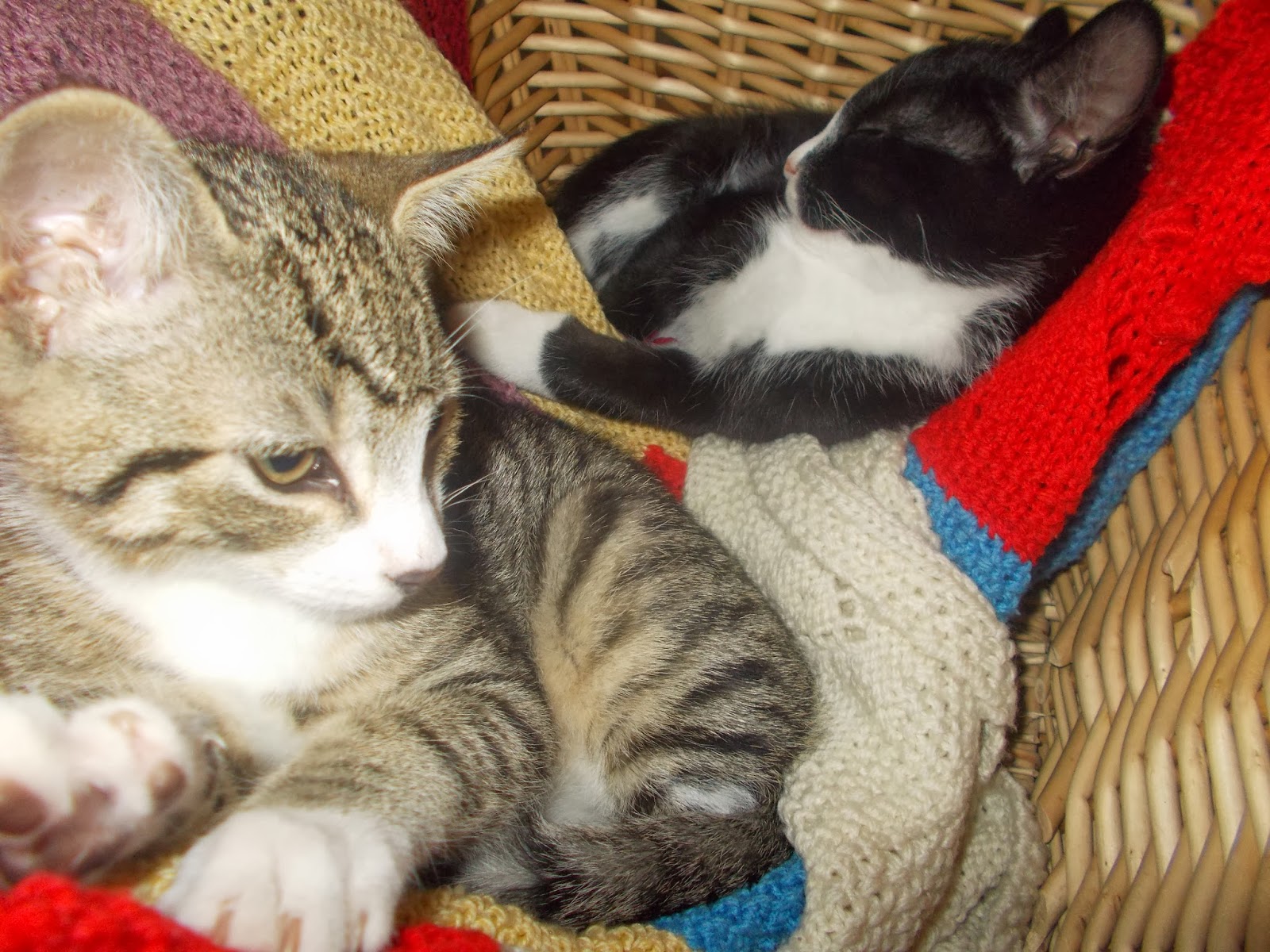
Both children have enjoyed this and Younger Daughter will quote this around the house when she finds the cats sleeping, anywhere but their basket.

In November, after half term, we hope to revisit Robert Frost's poem, Stopping by Woods on a Snowy Evening. This is already familiar to the children from when we studied this as a Five in a Row book almost two years ago. I don't think that they can recite the poem now but the familiarity should make it easier to learn.

Do you have favourite poems to learn with younger children?


Ten thoughts on tiredness

Probably all mothers get tired. Add home education and at least some tiredness, some of the time is a dead cert. In addition, many people have other additive reasons for being tired:
  • pregnancy
  • babies and young children
  • poor health
  • children with poor health
  • caring for older or unwell relatives or friends
  • being a single parent
  • having to work a paid job or run a business 
  • others that have escaped my tired brain.

These are a few thoughts about how to manage; perhaps, partly to remind myself.

  • The Lord Jesus was tired. He fell asleep in the boat and wasn't woken by a storm. It isn't wrong to be weary when performing our God given tasks.

  • Other people are busy too. When we are really tired it can be easy to think "I'm the only one." It just isn't true. It can be strangely comforting to think about and pray for other people who are busy. I've found it helpful to remember how hard our grandmothers had to work and how few of our modern conveniences they had.

  • It is possible to manage after a night of very little sleep. I learnt this lesson as a junior doctor, in the days before hours were regulated. There isn't much that is positive about a shift that starts at 9am on Friday and finishes after 5pm on Monday. I don't think that I ever had no sleep in that time but often had very, very little, and that with the every present bleep  but I did learn that it is possible to carry on. Of course it is easier to make mistakes so be very, very careful about safety and especially, avoid driving when tired. 

  • Occasionally, it is worth deciding to miss some sleep for a greater good. Going to a Bible Study or being hospitable may mean a couple of hours less sleep. It may be easier to make the choice of sleep with a messy house or cleaning and less sleep before the event than making the decision on coming home or when the guests have left.

  • Everyone responds to being tired in different ways. I find as tiredness progresses to overtiredness that I start to think that
Nobody loves me
Everybody hates me
I might as well eat worms.

 or something similar. When this thinking pattern starts, I need to stop. We do our children a service if we help them to recognise the signs of being overtired.

  • Routine helps. On days after being up with a crying baby or taking someone sick to the hospital, having a routine really helps. These aren't the days for exciting activities but it is easier to keep to the usual pattern of meals and home education, if at all possible. 

  • Meals- no one is going to come to any harm from the occasional easy meal or takeaway. If the budget doesn't like takeaways then keep something easy in the house. Our easy staples are curry sauce, tinned chickpeas and rice or pasta and a quick tomato sauce. 

  • If a plan sounds too busy on paper, it is likely to be worse in reality! Simplify!

  • Pray. Often I've thought that the load is too great, have prayed and things have eased or become manageable in unexpected ways.

  • Remember God's grace is sufficient.  "My grace is sufficient for thee: for my strength is made perfect is weakness" (2 Corinthians12v9).