Showing posts with label history. Show all posts

Friday, 30 October 2020

Out of the Smoke

Children's historical fiction about London is always a hit, in this house, so I was pleased to have the opportunity to read Out of the Smoke which is due to be published tomorrow, 31st October.


Out of the Smoke is aimed at older children and set in the underbelly of Victorian London. 

Billy is an eleven year old climbing boy, one of the children used to clean chimneys by pulling himself up the chimney and using a brush from inside the flue. Strange to our thinking but it was thought that this gave better results than using brushes although, this method of chimney cleaning came at a heavy cost to the children involved. Billy had six years of experience as a climbing boy when the story starts and was proving useful as he had stopped growing. doubtless, partly due to chronic malnutrition. 

The dangers of climbing weren't the only problem that Billy faced. He lived in South London in a world of gangs, violence, drunkenness and neglect. His problems become worse and he has to flee his own area and face the dangers of gang warfare. 

I don't want to put in any plot spoilers except to say that Lord Shaftesbury, his Christian motivation and his work in eradicating child sweeps does come into the book.

Out of the Smoke has a clear Christian message: a message that is as relevant today, and to today's gang members, as it was to Billy's comrades. Billy has to learn that he can't help himself and that his own schemes don't work before he will listen to the simple Gospel message brought by the Earl.

I enjoyed reading Out of the Smoke and hope to use it with a book group for tweens, in the New Year. It would appeal to children from age about 10.  It has just the right mix of adventure, action and danger to appeal to tweenagers/early teens. Families with avid readers often look for books to give to younger children. There is a fair amount of violence and injury in the book. I am sure that it downplays the reality of the situation, however, it should be pre-read before giving to younger children, particularly, if they are sensitive. 

Highly recommended for readers from about age 10.

Out of the Smoke is published by Wakeman Trust and is available from the Metropolitan Tabernacle bookshop and Amazon. There are some accompanying resources on Matthew Wainwright's website plus the first chapter if you would like a taster.


If you enjoyed this post you may like to follow Delivering Grace by Google Friend Connect, Facebook, Pinterest, Instagram or e-mail.

Disclaimer: I was provided with a pdf review copy of Out of the Smoke. I was not required to write a positive review. The opinions are my own.


Saturday, 24 October 2020

Wulfgar and the Dragon

Wulfgar and the Dragon is the second book in the Wulfgar the Saxon trilogy by Christina Eastwood. I reviewed the first book, Wulfgar and the Vikings earlier in the year. Both are children's historical fiction set in southern England in the ninth century. 

In this new volume, there are rumours of damage to crops and animals by a strange beast. Wulfgar and his mentor, Morcant, set off to investigate. Their findings lead to decisions around loyalty. What is the explanation for the strange beast? Has Wulfgar made the right decision about his findings and what will be the consequence?

This book would help bring a study of the Saxons alive. It is written from a clear Christian worldview and brings up issues such as honesty, loyalty, older Christians doing wrong, a troubled conscience and a changed life. 

The book is said to be for 9-12 year olds and this is fair. Keen readers will finish this book quickly and I think that it would also be suitable for slightly younger readers providing they aren't particularly sensitive. There are some injuries in the book and animals are killed but this isn't over dramatised. 

CS Lewis said 

A children's story that can only be enjoyed by children is not a good children's story in the slightest. 

When Wulfgar and the Vikings  arrived, my husband immediately asked if he could read it as he had so appreciated the first volume. I certainly found it a splendid book. My eleven year old was also fascinated with the idea of a book including dragons. So, this book is recommended by us.

Wulfgar and the Dragon is available from Ritchie Christian Media and also from Amazon. This new book is complete in itself but like any trilogy, it makes most sense the read the first book, Wulfgar and the Vikings first. I hope that when all three volumes are available, there will be an option to buy the trilogy as one volume.

If you enjoyed this post you may like to follow Delivering Grace by Google Friend Connect,Facebook, Pinterest, Instagram or e-mail.

Disclaimer: I was provided with a review copy of Wulfgar and the Vikings. I was not required to write a positive review. The opinions are my own.


Friday, 10 July 2020

Middle Ages History resources

We have just finished a year studying the Middle Ages. This is our second visit to the Middle Ages as we also spent a year learning about this time period five years ago. (For anyone who  wonders we do a four year history cycle but spent an extra year learning about Ancient civilisations).

My younger two, who are home educated would be in years 6 and 8 if they were in school. These are the resources that we have used this year and below, I will put a list of resources that we used previously.

  • Story of the Middle Ages by Christine Miller. This is updated from older books by HA Guerber. We used this book as a read aloud in morning time. Reading one chapter per day, it lasted from September to the beginning of June. We liked this book. The chapters are short and it covers French history as well and English. The major downside of this book is that it is American and not small so postage would be an issue. We have a print copy from days when exchange rates were more favourable but Nothing New Press sell an ebook which would probably be my choice if I were buying it again.
  • Story of the World volume 2: The Middle Ages by Susan Wise Bauer. I used this with my son who is 11. This book is well written and popular with the children. It also gives a balance of World history as opposed to just Western European and American history. It comes from a liberal Christian stable and Reformed Christians might would to add a bit to her explanation of the Reformation. 
  • Galore Park History for Common Entrance: Medieval Realms Britain 1066-1485. My 13 year old used this book. This book includes many written exercises including those where sources need to be compared. In fact, we sometimes selected exercises when a chapter seemed to be ending with three essays! The book is well presented although we did add videos to this. I just googled the relevant time/character plus KS3 which generally brought up short videos. I pre-watched these. The other issue with this book is that it doesn't begin particularly early in the Middle Ages so was out of synch with our other reading for a fair while. Sometimes the content was rather thin and more research was really necessary.
  • Veritas Self Paced: Middle Ages, Renaissance and Reformation. I used this, with my youngest, as they have a special free access for lockdown for a couple of months. We had used this before with his older sister. This is engaging but expensive. As we had almost finished the year, it was  fun but not something that we decided to continue. This is definitely worth considering at the start of a year and they often have offers which make the cost a bit less.
  • Sketches from Church History by SM Houghton is my go to church history for older children. It works well in morning time.
  • Secrets of the Castle is a series of five videos about modern day reconstruction of a castle in France using traditional building techniques. 
  • Richard III: the King in the Car Park is a documentary about the discovery of the body of Richard III. This had us talking for days. There is a Richard III Society which feels strongly about Richard III and his reputation and they spearheaded the dig for his body. This documentary is more suitable for older children who can cope with skeletons and discussion of battle injuries.
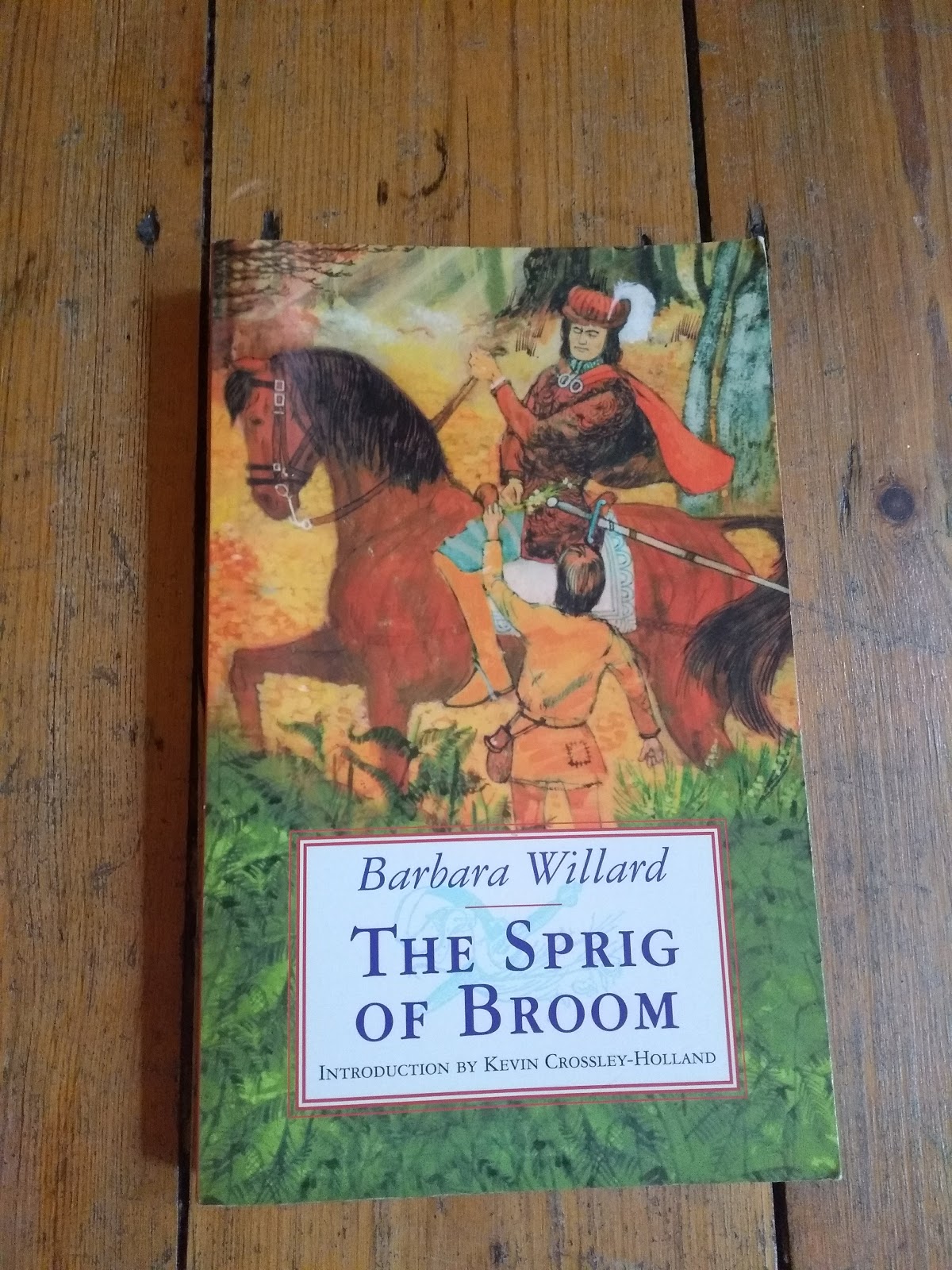
  • |The Sprig of Broom by  Barbara Willard. This is part of the Mantlemas series and is historical fiction about the end to the Middle Ages/beginning of the Tudor period. This ties in well with learning about Richard III and the Battle of Bosworth. Again, this is more suitable for older children. 
Activities and resources which we used to study the Middle Ages when the children were in years 1 and 3.
  • Veritas Self Paced. 
  • I wrote about the books that we used here. In retrospect, I think that the David Macaulay books, Castle and Cathedral, would probably work better at a slightly older age. I pulled them out again recently.
  • Medieval feast. We took inspiration from the book by Aliki, A Medieval Feast. This involved cooking, dressing up, art and music.
  • Trips out. A castle and abbey are the obvious field trips for the Middle Ages and if you live within reach of Battle, visiting the site of the 1066 Battle between Harrod and William, is definitely worth doing. 
Anyway, we have enjoyed our investigation of the Middle Ages. There is so much more that we could have done but hope that these ideas may be useful for others.


If you enjoyed this post you may like to follow Delivering Grace by Google Friend Connect, Facebook, Pinterest or e-mail.

Saturday, 22 February 2020

Wulfgar and the Vikings

This year, we have been learning about the Middle Ages in History so I was delighted to be asked to review Christina Eastwood's new book Wulfgar and the Vikings.


Christina is a Christian author who home educated her children. I have reviewed her book, Not without Tears previously and enjoyed her novel set in Italy, Switzerland and Ireland, Trasna na Dtonnta.  When my children were younger, we used some of the home education resources which Christina collected together as a Mother's Companion.

Wulfgar and the Vikings is the first in a children's trilogy called Wulfgar the Saxon. Wulfgar is a fictional boy living in the village of  Leofham, in the Kingdom of Wessex during the days of King Alfred the Great. The story is around the dangers from the Vikings and the arrival of a stranger, Morcant from Wales. Morcant is a skilled medicine man who also teaches the villagers to read and has a teaching which is different from that of the monks who came round to collect rents and the church dues. 

The theme of wanting a written copy of the Bible in English is throughout much of the book and of course, the threat of the Viking raiders. 

This living book is ideal for reading whilst learning about King Alfred. There has been much care around historical details such as the illness of the King, the relevant battles and the Celtic church. It did send me to  do some research to find out more about this period in history.

Wulfgar the Viking is a short read and would be ideal for children aged 8 plus. The book is complete in itself despite being the first of a trilogy. I look forward to reading the rest of the trilogy. Recommended!

If you enjoyed this post you may like to follow Delivering Grace by Google Friend Connect, G+,Facebook, Pinterest, Instagram or e-mail.

Disclaimer: I was provided with a review copy of Wulfgar and the Vikings. I was not required to write a positive review. The opinions are my own.
Thursday, 3 May 2018

Second World War Learning Resources

Last term, we had a project about the First World War and this term, we switch to the Second World War. This is a plethora of resources which can be used for teaching children about the Second World War. These are books that either we have used or we hope to use soon.

Spine book
We are using the Usborne Introduction to the Second World War.
We read a double page spread each morning.
We have found that the linked videos for these books are often worth watching. I haven't seen all of them though!


Read alouds
There are so many Second World War read alouds. This is a small selection which we have enjoyed.


  • The Endless Steppe by Esther Hautzig
    is the true story of a Jewish family deported from Vilna, then in Poland (now Vilnius in Lithuania) to Siberia after the Russians invaded Poland in 1941. 
  • The Hiding Place by Corrie ten Boom is another true story about a Dutch Christian family who hid Jews. This book is quite sad in places. I recently read it with my eleven year old who thought it was one of the best books she has read, however, do avoid this with very sensitive children and I would suggest reading this together for children who are not yet teenagers. Christian Focus have a children's biography of Corrie ten Boom called The Watchmaker's daughter by Jean Watson. We read this before The Hiding Place. This book provoked discussion and led to the read of The Hiding Place.
  • Number the Stars  by Lois Lowry is a fictional story about the escape of Jews from Denmark to Sweden. This book was read in my home education book club by children aged 9-13 and was well received. It uses historical facts to weave the story. 
  • Chinese Cinderella is a rather different book which is set in China at the time of the Second World War and afterwards. This isn't directly about the war but brings to light how it affected China.
  • When Hitler Stole Pink Rabbit is the account of how author Judith Kerr's family escaped Nazi Germany in the preWar years and their life in exile. This book is suitable for older children. I haven't read the sequels but my understanding is that they are not so child friendly.
  • The Silver Sword is about refugees at the end of the War. I loved this book as a child although rereading as an adult, it seemed that the ending was unrealistically optimistic but it certainly gives ground for hope.
  • Hero on a Bicycle, by Shirley Hughes, is a story about the Italian Resistance.
Picture Books
  • Grandfather's Journey tells how an American-Japanese family was affected by the War.
  • All those Secrets of the War is about an American father going away to the War.
  • A new coat for Anna shows the devastation in post War Europe as the mother works to get her daughter a new coat.
  • Boxes for Katje tells the story of how a friendship was forged helping the people of post War Netherlands.
Other Resources
  • Family history/members. We have a Second World War diary written by the children's Grandfather and oral history about grandparents/greatgrandparents/greatgreatgrandparents. For us, this covers the Blitz, the Battle of Britain, rationing, the War in Italy and Africa, the Observer Corps and MI5 so plenty to talk about. I imagine that many families have a similar amount of World War Two history covered.
  • Bombsight is a website which maps places where bombs fell in the UK during the War.

 Places to Visit
  • Imperial War Museum has a permanent exhibition about a London family during the War. This is child friendly. We have been to this exhibition several times. There is also a Holocaust exhibition which is not recommended for children under the age of 14. I haven't seen this as I haven't been to the Museum without a child under 14 for many years. 
  • The Jewish Museum do have a small Holocaust section which is suitable for younger children. 
  • Cabinet War Rooms-I haven't been to these although one of the children went on a home education trip.
  • Dover Castle-Secret Wartime Tunnels and Hospital.
  • Chartwell-the home of Winston Churchill.

Please add your recommendations for teaching children about the Second World War in the comments.
If you enjoyed this post you may like to follow Delivering Grace by Google Friend Connect, G+,Facebook, Pinterest, Instagram or e-mail.

Friday, 9 March 2018

Beginning of the Year Update

We are well into our second half term of 2018.

Our major project this term is around the First World War. I've written about some of the resources that we are using. The Usborne Introduction to the First World War has proved invaluable as a spine. We read a double page spread each day and frequently use the videos linked through the Usborne site.

The other main part of our project has been working on family history. We have made a large family tree and added a sentence of two about family members who were involved in the War. One of my husband's great aunts was a nursing sister in the War and left a diary about her time on a hospital ship going between the Greek Islands and England as well as her time nursing under canvas, at Camiers. We have looked at the diary and one of the children made a poster about her and also included an incident when she was on hunger strike with Mrs Pankhurst.
Hand drawn cartoon found in a commonplace book from a family friend who was killed in the First World War.

We spent an afternoon at the Imperial War Museum looking at their First World War gallery.

This term, we have changed spelling curriculum to Apples and Pears. Our previous spelling programmes whilst highly recommended, just wasn't working for us. So far, so good with Apples and Pears although I have discovered that often spelling/reading resources seem to work well initially, while the work is mainly revision but then breaks down when there is new material to be learned. I'm hoping that this won't happen this time!

We have also started a different science curriculum: Mystery Science. This is very easy for me- videos to watch and easy activities, generally, using household items.  So far, we have used, and finished a chemistry unit. Next up, I plan to use a human biology unit. This curriculum is working very well with my nine year old. My eleven year old finds it a bit young at times.

Our home education group also has a science theme this year although we had to postpone our last meeting due to the snow. The snow meant sledging with friends-three days running! Snow is so rare in London that we have to make the most of it.


Our read alouds this term are
  • Twice Freed by Patricia St John. We have almost finished this fictional retelling of the story of Onesimus. 
  • War in the Wasteland which is a First World War story by Douglas Bond.  
I have another couple of First World War books planned but suspect that we will run out of time. There are so many more things that we could do but sometimes less is more!

If you enjoyed this post you may like to follow Delivering Grace by Google Friend Connect, G+,Facebook, Pinterest, Instagram or e-mail.

Saturday, 20 January 2018

Top Home Educating Resources

Welcome to week three of the Virtual Homeschool Fair run by Susan of Homeschooling Hearts and Minds. This week the topic is How do we cover it all? This is about the programmes and resources that we use.
[virtual+homeschool+fair-003%5B3%5D]
We have been home educating for almost nine years. This post is about some of our favourite resources.  Some of these items we no longer use but they are ones that have left happy memories. Two of these are free!


My children are now too old for Five in a Row but this was a happy curriculum. Five in a Row is a gentle curriculum aimed at 4-8 year olds around picture books. Each week a different book is selected and read each day. The handbooks then have activities around the book which cover science, maths, art, English, craft and cooking. 

Plus points
-the children and I loved Five in a Row.
-excellent selection of picture books
-manuals have a high resale value
-enormous range of activities so those which fit your family can be selected.
-designed for home educating families

Bear in mind
-Five in a Row is probably better for the lower end of this age range.
-many of the books are American and some are out of print. We decided only to buy the books which were inexpensive and easily obtainable and were able to find the vast majority. 
-It isn't necessary or desirable to do every activity in the manual.
-Branch Out World is written by a UK home educator. This is a similar sort of programme based around picture books but these are based in the UK. For example, Mousehole Cat or Katie Moray.
Veritas self paced history is an on-line history course which is used daily. It has an accompanying list of literature which we used and found enhanced the course. We used it for two years covering New Testament, Greeks and Romans and for the second year, the Middle Ages, Renaissance and Reformation.  A typical day would include teaching, maps, a history song, a game and a revision game and more.
Plus points
-generated a love for history.
-requires little parental time and virtually no preparation.
-attractively designed.
-literature bundle enhances the on-line programme

Bear in mind
-after the Middle Ages, Renaissance and Reformation year, the course starts to cover mainly US history. We stopped using the course at this point.
-not cheap but there seem to be sales about twice a year with major reductions (about 50%).
  • Exploring Nature with children
This is a weekly nature curriculum written by UK home educator, Lyn Seddon. 
Exploring Nature with Children is based around a weekly nature walk to the same venue. This can be the back garden, a local park or some countryside. Each week has a theme, for example, seeds, lichen or birds and the weeks are grouped into seasons. Each week includes a poem, book recommendations, an art suggestion and activity suggestions. This may be art or craft, science, writing or music. Children and parents are encouraged to keep a nature journal but there is a separate, more structured journal which can be purchased either with print copy or cursive copywork.

Plus points
- a major encouragement to get outside and to look at nature.
-plenty of activities for a range of ages.
-ideal for UK seasons.

Bear in mind
-this book is written for UK weather and seasons. It may need some modifying if your seasons are very different.
-it isn't necessary to do every activity.
-these are ebooks. The main title can be used on a tablet but the journals obviously need to be printed.

  • Poetry Teatime
Poetry Teatime is a brainchild of Julie Brogart who designed Bravewriter. We have used Partnership writing and certainly use some of the ideas around teaching writing. However, the part of the Bravewriter programme which has impacted us most is the concept of a Poetry Teatime. This is a time set apart for reading poetry, and sometimes other books, over a drink and a snack. Sometimes, we have a carefully laid table and a special snack and other times, the poetry reading is less formal. I have complaints when we miss Poetry Teatime.

Plus points
-poetry in a relaxed environment. 
-reading aloud practice
-sometimes, we write. Covering the table with brown paper and providing pens helps this.
-sometimes, we invite friends to this sociable occasion.
-poetry tea can take place outside the home. We have had poetry in cafes while waiting for an older child taking exams or at Bateman's,  Rudyard Kipling's home, because this seemed the place to read Kipling .

Bear in mind
-you might not want to introduce an extra snack! We are trying to have healthier snacks although this doesn't always work.
-funny poems work well, particularly, with children who aren't used to poetry.

  • Morning Time
Morning time is another free resource. This is a time to gather all your home educated children and spend time together. Morning time can make a definite start to the day and helps put first the items that you want to be first in importance. We start with prayer, a Christian book, memory work and a hymn. 
We then put in either extras that we don't want to miss or a special book/topic. Our current items are
-a double spread of  the Usborne Introduction to the First World War
-a chapter from one of the children's current book club choices: a Long walk to water and the Astounding Broccoli Boy.
-a weekly podcast from Classics for Kids or music from the First World War.

Resources for Morning Time include
-Pam Barnhill's podcasts Your Morning Basket
-Kendra Fletcher's book Circle Time: the best part of your day
-the Farmhouse Schoolhouse posts about Morning Time.

What are your favourite home education resources? 

Looking for more curriculum ideas? Visit my fellow homeschool bloggers! 

Our Homeschool Plan for 3rd, 6th, 8th, & 12th Grades by Susan @ Homeschooling Hearts & Minds
Our 10th Grade Plans by Christy @ Unexpected Homeschool
Planning Out Our Unschooling Studies by Jen @ A Helping Hand Homeschool
The Details of Curriculum by Michele @ Family, Faith and Fridays
Reflections of a Curriculum Junkie by Brittney @ Mom's Heart
Freedom through nature journaling. by Kim @ Good Sweet Love
How I pull together a homeschool curriculum without packaged curriculum by Dana @ Life Led Homeschool
Our Favorite Curriculum and Resources - An Annotated Bibliography by Sabrina @ Kids, Crunch, and Christ
Our 2018 Homeschool Curriculum Choices by Amanda @ Hopkins Homeschool
Top Home Educating Resources by Sarah @ DeliveringGrace
Homeschooling Curriculum We Are Using This Year by Laura O @ Day by Day in Our World
Use the Force and Complete the Course by Kym @ Homeschool Coffee Break
Choices, choices - how to choose your curriculum wisely by Lizzy @ Peaches@Home
Our Curriculum Needs - grade seven by Annette @ A Net in Time
The Heart of Our School by Laura @ Four Little Penguins
What I Use with 7th and 9th Grader - Virtual Homeschool Fair -Week 3 by Joelle @ Homeschooling for His Glory
How to Avoid Gaps in Education by Kristen H. @ Sunrise to Sunset
Tricky Subjects and Starting the Decision Making Process by Lori H @ At Home: where life happens
High School Syllabus by TrueNorthHomeschoolAcademy @ GoldenGrasses

If you enjoyed this post you may like to follow Delivering Grace by Google Friend Connect, G+,Facebook, Pinterest, Instagram or e-mail.

Please note that the Exploring Nature with Children links are affiliate links.


Friday, 5 January 2018

First World War learning Resources

This term's history is around the First World War. There are so many resources available but this is a quick overview of some that we hope to use. My relevant children are aged 8 and 11. 

Spine books
These are books which we will be using to learn a basic outline of what happened. None of these are primary sources and we will talk about this.
  • The Story of Britain by RJ Unstead. This has a useful chapter about the years up to the First World War and then covers the First World War in a chapter which will be a quick overview!
  • The Usborne Introduction to the First World War. This is just over 120 coloured pages and will be our main source book.
  • Usborne History of the World: the First World War. This will be more for the children to dip into. 

Read alouds
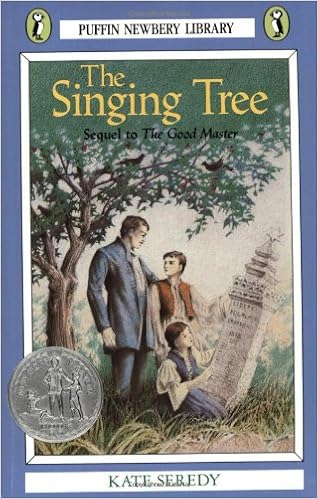
  • The Singing Tree by Kate Seredy. This is a sequel to the Good Master but is a story about the First World War from the other side. The story is set in the Hungarian Plains where the soldiers go to fight for the Austro-Hungarian Empire.
  • War in the Wasteland by Douglas Bond. This is a fictionalised account of CS Lewis's time in the trenches.
  • If time, War Horse or Private Peaceful by Michael Morpurgo. 
Picture books

I wrote about this almost four years ago. We won't be using these to the same extent now but just to say that these three are particularly worth revisiting with older children.
  • Alfie's War Scrapbook
  • Where the poppies grow-this comes out at Poetry Tea occasionally.
  • Fly, Cher Ami , Fly
Other resources
  • local maps from the First World War or just before. We have been able to locate a 1913 map of our area.
  • family diaries and photos
  • Home Front Legacy This app can be used to record local First World War sites.
  • War Poetry website
  • local history websites
London Places to Visit
  • Imperial War Museum has a First World War gallery
  • National Army Museum has a self guided trail about a soldier's life in the First World War
  • War memorials
  • Other buildings associated with the First World War. The Home Front Legacy site has information about many but not all. 
If you enjoyed this post you may like to follow Delivering Grace by Google Friend Connect, G+,Facebook, Pinterest, Instagram or e-mail.

Tuesday, 31 October 2017

Early Autumn Learning

Writing about our learning is always a balance. We have had some great and enjoyable days but there are always adjustments to the plans to be made and times realise how much we need God's grace. 

These are a few of the highlights of the last few months.

Science
Our local home education group has a science theme, this year. This has meant practising activities at home in the days before each session. Particularly popular was the rocket, although I was far too busy to record it; extracting DNA from strawberries
and melting chocolate (states of matter!). 

The group was able to vote on the Royal Society Young People's Book Prize. We are now waiting to find out if our choice was the overall winner.

Art
Younger Daughter has been working on an Explore Art Award in photography. This meant a dash up to the Natural History Museum, one Saturday, to see a wildlife photography exhibition before it closed.
This award also means working on a project. The plan is to combine art with history studies.

Poetry Tea
This term has been busy so I thought that we might have fewer poetry teas. However, it turned out the Poetry Tea was an important part of the week and no one wanted to miss this. 

Nature Walks
We are using Exploring Nature with Children and this year, using the new journal.

Seaside Trip
We had a week away, at the sea,
in Bournemouth, while my kind husband held the fort here. Our time away included a long cycle ride,
time on the seashore with rather wet paddling, a visit to Corfe Castle and the Bournemouth Aviation Museum. 

Reformation Day
Today,we have celebrated the 500th anniversary of Luther's 95 theses being pinned to the door of the Castle Church in Wittenberg. Over the last few weeks, we have been reading Danika Cooley's book When Lightening Struck about the life of Luther. Other activities have been

Of course, we had to have some themed food: sausages and Black Forest gateau.

This term, there has seemed to be more to do than time! Trying to prioritise seems a major challenge. Any thoughts?

If you enjoyed this post you may like to follow Delivering Grace by Google Friend Connect, G+,Facebook, Pinterest, Instagram or e-mail.
 

Thursday, 10 August 2017

Sources of Home Education Inspiration: History

This is the fourth in a series about resources in home education. 
Part 1: Sources of home education inspiration.
Part 2:English
Part 3: Science
This post focuses on history. There are plenty of materials around so I have concentrated on those which we have used.

History Curriculum

  • Veritas self paced. We used this curriculum for a couple of years doing the Greeks,Romans and New Testament year followed by the Middle Ages, Renaissance and Reformation. These are all on the computer and require a daily slot to get through the sessions over a year. In addition, to the computer programme, history cards are needed. There are optional literature selections which I highly recommend. This programme was very popular with my history loving daughter. Both she, and I, learned so much. In addition, to the actual teaching there are map activities, a history song, revision games and more. Highly recommended. Sadly, the latter years tend to focus on US history which is our only reason for leaving Veritas self paced. If they had a parallel world history unit then we would be very interested!
  • Story of the World. We have used this curriculum in a couple of ways. First, to add to parts of history which we had learned out with Veritas. This worked well and second, as a history curriculum over the past year along with the activity book. Sadly, this has worked less well for us. This has been for several reasons: there are many topics but no built in revision so it has been difficult to hold the information and also because the activity book has been overwhelming. There are too many book choices, very few of which are available in the UK. We haven't used the first volume much but please note that some of the Bible sections are not Biblically accurate.
  • Story of God's Dealings with our Nation by Christina Eastwood. This is a Christian, UK history. We did find its format a little dry and worksheet based but I plan to use it again, alongside other books.
Books

There are so many books which can be used. These books are most relevant for primary aged children.
  • People in History and other titles by RG Unstead. These books have been around for years. I remember reading Unstead's histories when I was in school. Unstead was actually a primary school head teacher after the Second World War and wrote easy histories for his pupils. The older editions also tend to have large font.
  • Our Island Story by HE Marshall is the history of the UK. It is available as a book or as an audio book. The pluses of this book are that it is very readable and that it has more detail about the Middle Ages than many similar books but the downside is that it stops at the end of Victoria's reign. 
  • The Great History of Britain by Anne and Paul Fryer is suitable for children from about six and is another book with large font making it ideal for early readers.
  • Ladybird history books are generally out of print but cheap second hand. They have a picture on each page.
  • Usborne and DK have many illustrated history books which we often add to learning about any particular time period.
  • Simonetta Carr's Christian biographies for Young Readers are beautifully produced books around characters in church history. Each book includes maps and timelines.

Fiction

We have found historical fiction an amazing way to raise interest in history. This list could be enormous so I will limit this to the books which have had most influence here.
  • Roman Mysteries by Caroline Lawrence. These have been read by both older and younger children. One of my younger children is a real enthusiast about these books and Roman times. Reading the Roman Mysteries has piqued an interest in all things Roman.
  • Veritas historical literature lists. We used these when we used the Veritas self paced curriculum.
  • My blog post on chapter books contains many more suggestions.
Other
  • Timeline. We have sometimes used timelines and tend to make our own using wall paper lining paper which is cheap and cheerful.The Trinitarian Bible Society have produced a rather more beautiful timeline of the Reformation.
  • Visits. Adding visits to museums and historical sites is easy. English Heritage allows free educational visits although these do have to be booked in advance. Many museums are free.
  • Book of Centuries is really another way of keeping a timeline. This link explains. We haven't made a Book of Centuries yet.
  • History file. This is an idea from a friend which I hope to start in the autumn. This involves keeping a file of history work, pictures and leaflets, perhaps from somewhere which you visit, in chronological order. It sounds an easy way of keeping everything in order, both physically and intellectually. 
  • Young Archaeologists club. This is a fantastic resource. There are branches all over the country. Our club meets once a month and also has trips to exhibitions as well as talks which usually include some sort of activity and often the chance to handle archaeological artefacts.
  • Themed meals. For the last couple of years, we have had a meal themed to the history which we have been studying. The first year was a Medieval banquet and the second a Thanksgiving dinner to remember the Pilgrim Fathers. Both involved dressing up and relevant cooking as well as investigating music and wall decorations.  This has been an amazing learning experience.
Please share your favourite history resources. I'm always looking for more!

If you enjoyed this post you may like to follow Delivering Grace by Google Friend Connect, G+,Facebook, Pinterest, Instagram or e-mail.

Friday, 21 July 2017

The Singing Tree


Over the next year, one of our history topics will be the First World War so I have been looking for some child friendly historical fiction about this time.

Earlier in the year, the book club read The Good Master which is set in Hungary in the years preceding the First World War. Most conveniently, there is a sequel, The Singing Tree which is set in the First World War.
The book starts with arrangements for a wedding in traditional Hungarian style, however, the wedding takes place on 28th June 1914 and as the villagers go home, the men hear the news of the assassination of Franz Ferdinand. Of course, over the next few weeks, war starts. No one, on the Hungarian plain really knows why they are fighting but the men gradually disappear to war. The farm work is increasingly left to the old and young men and the women. In particular, thirteen year old Jancsi has to run a large farm, as the Little Master. 

As time passes, Jancsi's uncle becomes a prisoner of war in Russia and his father is missing. The farm acquires Russian prisoners of war as farm hands and then hungry German children as evacuees. 

The book has themes

  • the pointlessness of war
  • ordinary people on both sides are much the same
  • people are worthy of respect regardless of race.
  • the psychological effects of war
An interesting motif, in view of what happened latter, is the important role of the Jewish shop keeper in the village. There are points when there is some foreshadowing both of Jewish persecution and of communist sentiment. 

This is a fascinating and sensitive book which should cause some thought. Ideal for children aged 8 to 12. There are no vivid descriptions of fighting in the book although some minor characters die and a major character is in a military hospital.

Highly recommended.

If you enjoyed this post you may like to follow Delivering Grace by Google Friend Connect, G+,Facebook, Pinterest, Instagram or e-mail.

Thursday, 22 June 2017

English Heritage Visit

Today, we visited Apsley House, otherwise known as One London, which was the home of the Duke of Wellington.
Like many other properties, this belongs to English Heritage and we were able to have a free self guided educational visit. This is the first time that we have organised one of these visits for ourselves. Today, I didn't organise a group beyond children as I wanted to see how the system works.

The most daunting part of the visit was filling in the booking form with our educational objectives. My children had been learning about the French Revolution and the Napoleonic Wars in history so in many ways, this wasn't difficult. I was a bit concerned about how much detail was needed but it seemed to pass muster!

Having booked the visit, I was entitled to a free visit as the educational leader and had the opportunity to pick up a classroom kit

which was aptly stored in Wellington boot shaped bags.


Prior to going, I was a bit concerned about the trip. One of the children doesn't always enjoy historic houses but thanks to a great audio-visual guide and helpful room guides, the trip was a success. The children were keen to do everything on the guide and didn't want to leave a room until all was complete.

More information about English Heritage education visits can be found here.

Disclaimer: These views are my own and those of my children. I was not asked to blog about my experiences.