Showing posts sorted by relevance for query Middle Ages. Sort by date Show all posts

Friday, 10 July 2020

Middle Ages History resources

We have just finished a year studying the Middle Ages. This is our second visit to the Middle Ages as we also spent a year learning about this time period five years ago. (For anyone who  wonders we do a four year history cycle but spent an extra year learning about Ancient civilisations).

My younger two, who are home educated would be in years 6 and 8 if they were in school. These are the resources that we have used this year and below, I will put a list of resources that we used previously.

  • Story of the Middle Ages by Christine Miller. This is updated from older books by HA Guerber. We used this book as a read aloud in morning time. Reading one chapter per day, it lasted from September to the beginning of June. We liked this book. The chapters are short and it covers French history as well and English. The major downside of this book is that it is American and not small so postage would be an issue. We have a print copy from days when exchange rates were more favourable but Nothing New Press sell an ebook which would probably be my choice if I were buying it again.
  • Story of the World volume 2: The Middle Ages by Susan Wise Bauer. I used this with my son who is 11. This book is well written and popular with the children. It also gives a balance of World history as opposed to just Western European and American history. It comes from a liberal Christian stable and Reformed Christians might would to add a bit to her explanation of the Reformation. 
  • Galore Park History for Common Entrance: Medieval Realms Britain 1066-1485. My 13 year old used this book. This book includes many written exercises including those where sources need to be compared. In fact, we sometimes selected exercises when a chapter seemed to be ending with three essays! The book is well presented although we did add videos to this. I just googled the relevant time/character plus KS3 which generally brought up short videos. I pre-watched these. The other issue with this book is that it doesn't begin particularly early in the Middle Ages so was out of synch with our other reading for a fair while. Sometimes the content was rather thin and more research was really necessary.
  • Veritas Self Paced: Middle Ages, Renaissance and Reformation. I used this, with my youngest, as they have a special free access for lockdown for a couple of months. We had used this before with his older sister. This is engaging but expensive. As we had almost finished the year, it was  fun but not something that we decided to continue. This is definitely worth considering at the start of a year and they often have offers which make the cost a bit less.
  • Sketches from Church History by SM Houghton is my go to church history for older children. It works well in morning time.
  • Secrets of the Castle is a series of five videos about modern day reconstruction of a castle in France using traditional building techniques. 
  • Richard III: the King in the Car Park is a documentary about the discovery of the body of Richard III. This had us talking for days. There is a Richard III Society which feels strongly about Richard III and his reputation and they spearheaded the dig for his body. This documentary is more suitable for older children who can cope with skeletons and discussion of battle injuries.
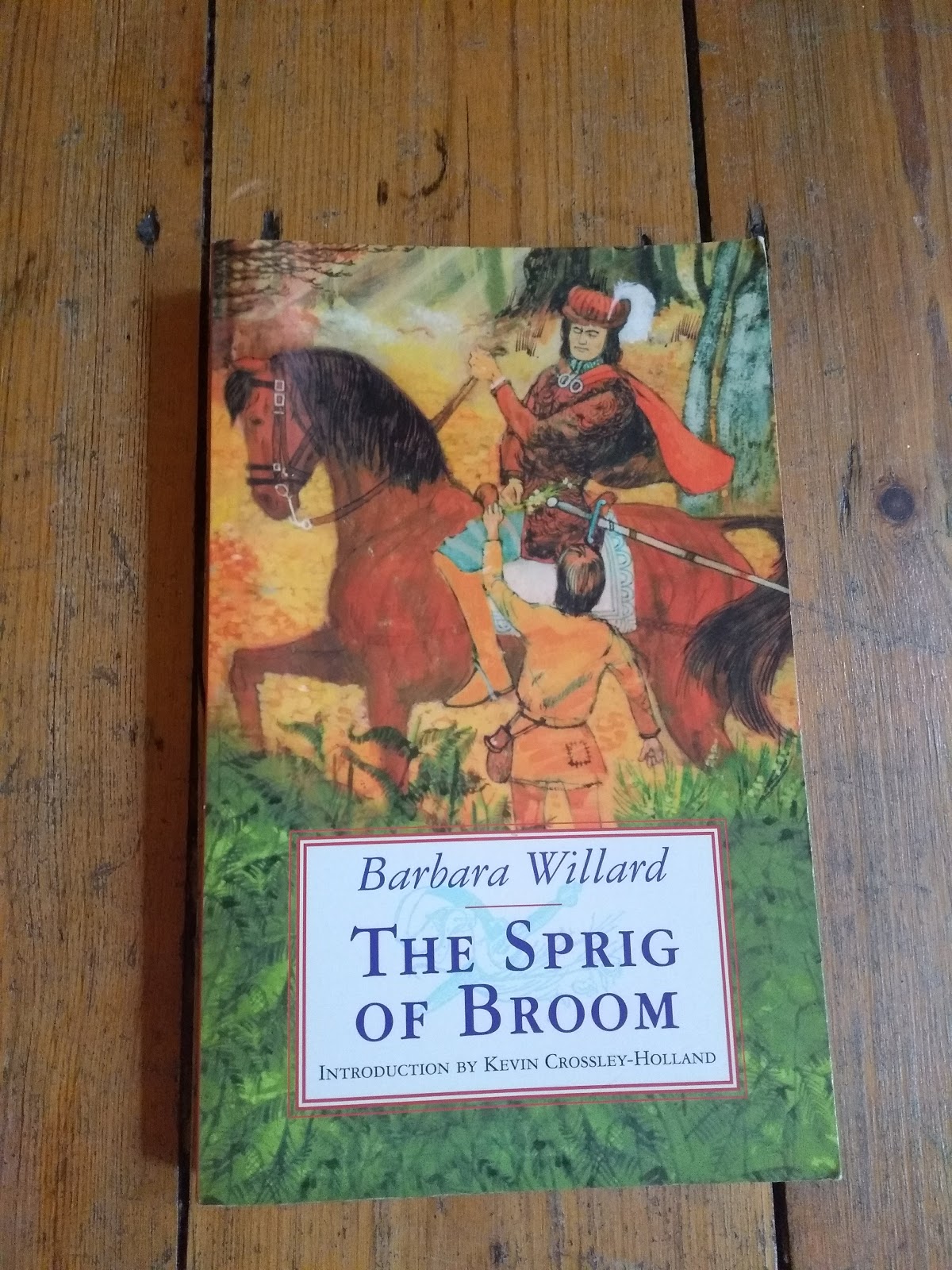
  • |The Sprig of Broom by  Barbara Willard. This is part of the Mantlemas series and is historical fiction about the end to the Middle Ages/beginning of the Tudor period. This ties in well with learning about Richard III and the Battle of Bosworth. Again, this is more suitable for older children. 
Activities and resources which we used to study the Middle Ages when the children were in years 1 and 3.
  • Veritas Self Paced. 
  • I wrote about the books that we used here. In retrospect, I think that the David Macaulay books, Castle and Cathedral, would probably work better at a slightly older age. I pulled them out again recently.
  • Medieval feast. We took inspiration from the book by Aliki, A Medieval Feast. This involved cooking, dressing up, art and music.
  • Trips out. A castle and abbey are the obvious field trips for the Middle Ages and if you live within reach of Battle, visiting the site of the 1066 Battle between Harrod and William, is definitely worth doing. 
Anyway, we have enjoyed our investigation of the Middle Ages. There is so much more that we could have done but hope that these ideas may be useful for others.


If you enjoyed this post you may like to follow Delivering Grace by Google Friend Connect, Facebook, Pinterest or e-mail.

Tuesday, 25 August 2015

Books for Children about the Middle Ages

We are using the Veritas self paced course on The Middle Ages, Renaissance and Reformation. Veritas has a helpful list of suggested books which we add at the point when these are suggested but we are also hoping to add  to this. My list isn't exhaustive. I'm using these books with my children aged 6 and 8 but do bear in mind that one of the children loves history and would spend all day learning about history given half a chance. 

This list is mainly for the Middle Ages and Renaissance. There are some more books that I would like to add for the Reformation but I need to do some prereading first, for age suitability.


I'm always looking for more ideas so feel free to suggest books.

General Books
  • Story of the World:volume 2. The Middle Ages. Susan Wise Bauer's book is the basis of its own history curriculum but it is well written and easy to add as an extra. We already had this book but not the activity book. However, since I found the activity book in the local home education library, of course, I borrowed it. The activity book has been a rich source of ideas and discussion, particularly, around the authenticity of the recipe for Viking bread.
  • Great History of Britain by Anne and Paul Fryer. This is suitable for many children of this age to read on their own and has clear, large print.
  • Our Island Story. This classic, by Henrietta Marshall, has many chapters on the Middle Ages. 
Biographies
  • Simonetta Carr has produced a range of biographies in her series Christian biographies for Young Readers. These are beautiful books containing illustrations, maps and timelines. Several of these cover the Middle Ages and the Reformation: These books aren't cheap but are well worth adding to your library.
  • Ladybird history books again have a wide range and many cover characters from this time period. They are out of print but can often be found second hand fairly cheaply.
  • Saint Patrick: Pioneer Missionary to Ireland by Michael McHugh. Don't be put off by the saint in the title. This isn't hagiography but the account of a Christian missionary in the Early Church.
Fiction
  • Beorn the Proud is the story of a young Viking chieftain. I am sure that this book presents a rather rosy view of life as a Viking captive but that does make it suitable reading for children!
  • The Little Duke by Charlotte Yonge
  • Lord of the Forest by BB is the fictionalised story of an oak tree and starts in the Middle Ages. 
  • Enid Blyton's Tales of Robin Hood and King Arthur and his knights. The Veritas list includes the Roger Lancelyn Green version of Robin Hood.
Other Non-Fiction

  • Castle and Cathedral by David Macaulay. These are fascinating accounts of the way in which a fictional castle or cathedral was built.
  • DK Eye Witness guides including Renaissance, Knights and Leonardo. 
  • Double Take: Two sides One story. Battle of Hastings. This gives Harold and William's side to the story. My children have strong opinions about who was really entitled to the throne so this will make interesting reading.
What would you add to this list?

If you enjoyed this post you may like to follow Delivering Grace by Google Friend Connect, G+,FacebookPinterest or e-mail


Thursday, 23 July 2015

Learning about the Middle Ages: Abbeys

My younger children have been learning about the Middle Ages and, of course, that includes monasticism. The role of monasteries and abbeys in life in the Middle Ages is fairly difficult for twenty first century children to appreciate but actually seeing the remains of one towering above the surrounding countryside does give an idea of their importance and also their wealth.

I find that teaching about the religious life of the Middle Ages is complex in terms of balance. As a child, I read many, many stories about the Reformation and why it was needed but really lacked an understanding of the importance of many religious houses in the education, health and social life of the times. One way to begin to understand this is for the children to see the size of some of these places and to talk about their other roles. 

The Abbey which we saw recently was Bayham Old Abbey, on the Kent/Sussex border. This Abbey belonged to the Premonstratensian Canons who kept to an order reputed founded on the rules set by Augustine of Hippo. Like Wenlock Abbey which we saw last year, this Abbey has extensive ruins.


 As well as the remains of an old gatehouse, The Kent Gate. It is assumed that there was a Sussex Gate but nothing remains of this.


This site is large and there were relatively few visitors when we were there-ideal for children who want to run!

There is also still a fair amount of detail.


Plus a much more modern, eighteenth century house on the site. A couple of rooms have been renovated to show the eighteenth century features and not surprisingly, are reminiscent of some of the rooms in some Jane Austen films.

Having romantic remains in the garden was fashionable.

In the distance, is the third related building, Bayham Abbey House which was built in Victorian times.

This was a beautiful, and relaxed day out; vaguely educational but with plenty of space to run. The site would be improved by some information boards but perhaps, that would detract from imagining the Abbey in its complete state, some eight hundred years ago.

If you enjoyed this post you may like to follow Delivering Grace by Google Friend Connect, G+,FacebookPinterest or e-mail.

Friday, 23 October 2015

Autumn Half Term

We have just finished the first half of our autumn term.

The new introductions were
  • Nature Study with Exploring Nature with Children.


    This has been a great success even, or perhaps especially, with the child that I thought would be least interested.

  • Poetry Tea. Again, this has been popular.
     Being a bit of a spoil sport, I was a bit concerned about an overdose of cake but there have been requests for poetry even on the couple weeks when I haven't provided cake.

  • Free writing. This is another Brave Writer idea. We spend a few minutes on Friday mornings doing free writing and then read our writing to one another. There is no marking of spelling or punctuation during free writing. Yes, I have to write too! In fact, all three of the new innovations have involved me being a participant. I'm sure that this has a beneficial effect on learning. Now, I need to translate this into the less popular parts of the day, particularly phonics and spelling.
Literacy/English aka Language Arts
This is the area that takes the most time. As usual, there has been plenty of reading aloud. Popular books this autumn have been
  • Stone Girl, Bone Girl
  • Door in the Wall
  • Marcia William's Three Cheers for Inventors
  • Augustine: Farmer's Boy of Tagaste
Phonics programmes continue although I don't think it would be fair to say that there are popular. We are currently using
  • All about Spelling
  • Dancing Bears.
Alongside these, we use Galore Park Junior English 2 and Jolly Grammar 2 workbook.

Middle Son works hard, with a tutor, for English and his other IGCSE/GCSE subjects.

Maths
Near the beginning of term, I changed Younger Daughter onto Galore Park Junior Maths 2. This seems to have been the right decision. Having children on two different years of MEP was just too challenging!

History
The Veritas self-paced remains popular. We are in the depths of the Middle Ages learning about the feudal system. This has been a fascinating course and I've learned loads. Justinian and Theodora and Otto I were, previously, not even names to me. 

Geography has been covered at our home education group where we have been learning about Asia. Younger Daughter helped a friend give a talk about Malaysia. It was lovely to see them both spending hours, at a time when they could have been playing, making a banner and doing research.

Science has been about rocks. A friend loaned us a collection to use for our activities.


Of course, the children made volanoes, again! 

We were able to visit Lyme Regis and see the strata in the rocks,
as well, as the extensive work that has had to be done to stop erosion.

The Dorest trip had other science related activities with a visit to the Naval Air Arm Museum

and to the South West Deer Rescue Centre.


The Dorest trip was probably the highlight of this half term. 

What I've been reading
  • When Lightening Struck! The Story of Martin Luther. Danika Cooley's new book about Luther. Review coming soon!
  • A Single Shard by Linda Sue Park for the home education group for next half of term. This is a Newbery award winning book set in Korea in the Middle Ages. 
  • When your child hates handwriting see review.
  • An eagle in the snow by Michael Morpurgo to check if it was suitable for the children and it was, until the last chapter. I've got reservations about this, such a shame as the rest of the book was fascinating.
  • JC Ryle's Expository thoughts on Mark's Gospel. I love this book. The thoughts are relevant to the passage, applied, challenging and succinct. 
Things I've been considering
  • History after the Veritas series on the Middle Ages, Renaissance and Reformation.
  • Picture books about Africa.
  • Children's book prizes 
  • Reading/writing workshops
Looking forward to half term!

If you enjoyed this post you may like to follow Delivering Grace by Google Friend Connect, G+,FacebookPinterest or e-mail.

Wednesday, 10 June 2015

Veritas Self-Paced: One Year on

I meant to post this earlier but life has been busy. Having someone come home from hospital takes time and life takes precedence over blogging!

Anyway, writing about Veritas Self-Paced: One Year on is a must.

Veritas Self-Paced history is an on-line 32 week course. There are five different courses:

  • Old Testament and Ancient Eygpt
  • New Testament, Greece and Rome
  • Middle Ages, Renaissance and Reformation
  • Explorers to 1815
  • 1815 to present
Last year, I had the opportunity to review New Testament, Greece and Rome  though the Schoolhouse Review Crew. We carried on using this and finished in early May.
By this time, we were quite sure that we wanted to carry on with another Self-Paced history course so I purchased Middle Ages, Renaissance and Reformation in a sale which allowed me to set the start date up to the end of August. I selected the beginning of June. Well, we missed our Self-Paced history slot and happily restarted this month.

How we use the course. Our mornings tend to run in much the same way: Bible, English (reading, phonics, writing, handwriting, grammar) and maths with a short break between English and maths. At the end of maths, the younger two children and I sit down to watch the Veritas Self-Paced. It is a bit of a reward, both for them and me. The lessons usually last between 30 and 50 minutes. Each week has a different historical theme, for example, the Minoans or the Barbarians and the Vikings. There are four lessons on each theme and the fifth lesson is a test. 

Some lessons have optional literature set, at two different levels: grades 2-3 (years 3-4) and grades 4-6 (years 5-7). We read some of the literature for the New Testament, Greece and Rome course and found that it is a helpful adjunct so have collected rather more of the literature for the latest course. This week, we have been reading Margaret Hodge's adaptation of St George and the Dragon.

It is really necessary to use the course, most days as the on-line access only lasts a year and there are 160 lessons. It is quite easy to do the test and an ordinary lesson in a day so using Self-Paced history four days a week would also work well. We often did this, particularly, if we had a trip out in the week.

Beyond buying the course and the history cards that go with it, the actual course takes virtually no parent time. Of course, if the literature is done as a read aloud that will take time but is optional. I love having something that I don't have to prepare.

The course can be watched by more than one child but only one child can take the tests and has their scores recorded. The youngest age recommended is second grade (year 3).

Pros:
  • High quality Christian course.
  • The children love the course.
  • We have all learned so much.
  • Multi-sensory.
  • Includes historical geography.
  • Supporting literature.
Cons:
  • The spelling can be difficult. Younger Daughter finds spelling difficult so we have an agreement that I will help her with the spelling. If your child can spell plebeian or cornucopia then they will manage fine but a struggling speller may need support.
  • The history cards for New Testament, Greece and Rome contained three with pictures of the Lord Jesus. The history song also shows these cards. 
We have decided to add some extras to this year's programme with some visits, a scrapbook and some art and music. It has been lovely to see how the courses have fired the children's imaginations and love for history. Recommended.

Disclaimer: I was provided with New Testament,Greece and Rome for review purposes. I was not required to write a positive review nor to provide a second review after a year. I purchased Middle Ages, Renaissance and Reformation for the use of my family. The opinions are mine and those of my children.

If you enjoyed this post you may like to follow Delivering Grace by Google Friend Connect, G+,FacebookPinterest or e-mail

Saturday, 20 January 2018

Top Home Educating Resources

Welcome to week three of the Virtual Homeschool Fair run by Susan of Homeschooling Hearts and Minds. This week the topic is How do we cover it all? This is about the programmes and resources that we use.
[virtual+homeschool+fair-003%5B3%5D]
We have been home educating for almost nine years. This post is about some of our favourite resources.  Some of these items we no longer use but they are ones that have left happy memories. Two of these are free!


My children are now too old for Five in a Row but this was a happy curriculum. Five in a Row is a gentle curriculum aimed at 4-8 year olds around picture books. Each week a different book is selected and read each day. The handbooks then have activities around the book which cover science, maths, art, English, craft and cooking. 

Plus points
-the children and I loved Five in a Row.
-excellent selection of picture books
-manuals have a high resale value
-enormous range of activities so those which fit your family can be selected.
-designed for home educating families

Bear in mind
-Five in a Row is probably better for the lower end of this age range.
-many of the books are American and some are out of print. We decided only to buy the books which were inexpensive and easily obtainable and were able to find the vast majority. 
-It isn't necessary or desirable to do every activity in the manual.
-Branch Out World is written by a UK home educator. This is a similar sort of programme based around picture books but these are based in the UK. For example, Mousehole Cat or Katie Moray.
Veritas self paced history is an on-line history course which is used daily. It has an accompanying list of literature which we used and found enhanced the course. We used it for two years covering New Testament, Greeks and Romans and for the second year, the Middle Ages, Renaissance and Reformation.  A typical day would include teaching, maps, a history song, a game and a revision game and more.
Plus points
-generated a love for history.
-requires little parental time and virtually no preparation.
-attractively designed.
-literature bundle enhances the on-line programme

Bear in mind
-after the Middle Ages, Renaissance and Reformation year, the course starts to cover mainly US history. We stopped using the course at this point.
-not cheap but there seem to be sales about twice a year with major reductions (about 50%).
  • Exploring Nature with children
This is a weekly nature curriculum written by UK home educator, Lyn Seddon. 
Exploring Nature with Children is based around a weekly nature walk to the same venue. This can be the back garden, a local park or some countryside. Each week has a theme, for example, seeds, lichen or birds and the weeks are grouped into seasons. Each week includes a poem, book recommendations, an art suggestion and activity suggestions. This may be art or craft, science, writing or music. Children and parents are encouraged to keep a nature journal but there is a separate, more structured journal which can be purchased either with print copy or cursive copywork.

Plus points
- a major encouragement to get outside and to look at nature.
-plenty of activities for a range of ages.
-ideal for UK seasons.

Bear in mind
-this book is written for UK weather and seasons. It may need some modifying if your seasons are very different.
-it isn't necessary to do every activity.
-these are ebooks. The main title can be used on a tablet but the journals obviously need to be printed.

  • Poetry Teatime
Poetry Teatime is a brainchild of Julie Brogart who designed Bravewriter. We have used Partnership writing and certainly use some of the ideas around teaching writing. However, the part of the Bravewriter programme which has impacted us most is the concept of a Poetry Teatime. This is a time set apart for reading poetry, and sometimes other books, over a drink and a snack. Sometimes, we have a carefully laid table and a special snack and other times, the poetry reading is less formal. I have complaints when we miss Poetry Teatime.

Plus points
-poetry in a relaxed environment. 
-reading aloud practice
-sometimes, we write. Covering the table with brown paper and providing pens helps this.
-sometimes, we invite friends to this sociable occasion.
-poetry tea can take place outside the home. We have had poetry in cafes while waiting for an older child taking exams or at Bateman's,  Rudyard Kipling's home, because this seemed the place to read Kipling .

Bear in mind
-you might not want to introduce an extra snack! We are trying to have healthier snacks although this doesn't always work.
-funny poems work well, particularly, with children who aren't used to poetry.

  • Morning Time
Morning time is another free resource. This is a time to gather all your home educated children and spend time together. Morning time can make a definite start to the day and helps put first the items that you want to be first in importance. We start with prayer, a Christian book, memory work and a hymn. 
We then put in either extras that we don't want to miss or a special book/topic. Our current items are
-a double spread of  the Usborne Introduction to the First World War
-a chapter from one of the children's current book club choices: a Long walk to water and the Astounding Broccoli Boy.
-a weekly podcast from Classics for Kids or music from the First World War.

Resources for Morning Time include
-Pam Barnhill's podcasts Your Morning Basket
-Kendra Fletcher's book Circle Time: the best part of your day
-the Farmhouse Schoolhouse posts about Morning Time.

What are your favourite home education resources? 

Looking for more curriculum ideas? Visit my fellow homeschool bloggers! 

Our Homeschool Plan for 3rd, 6th, 8th, & 12th Grades by Susan @ Homeschooling Hearts & Minds
Our 10th Grade Plans by Christy @ Unexpected Homeschool
Planning Out Our Unschooling Studies by Jen @ A Helping Hand Homeschool
The Details of Curriculum by Michele @ Family, Faith and Fridays
Reflections of a Curriculum Junkie by Brittney @ Mom's Heart
Freedom through nature journaling. by Kim @ Good Sweet Love
How I pull together a homeschool curriculum without packaged curriculum by Dana @ Life Led Homeschool
Our Favorite Curriculum and Resources - An Annotated Bibliography by Sabrina @ Kids, Crunch, and Christ
Our 2018 Homeschool Curriculum Choices by Amanda @ Hopkins Homeschool
Top Home Educating Resources by Sarah @ DeliveringGrace
Homeschooling Curriculum We Are Using This Year by Laura O @ Day by Day in Our World
Use the Force and Complete the Course by Kym @ Homeschool Coffee Break
Choices, choices - how to choose your curriculum wisely by Lizzy @ Peaches@Home
Our Curriculum Needs - grade seven by Annette @ A Net in Time
The Heart of Our School by Laura @ Four Little Penguins
What I Use with 7th and 9th Grader - Virtual Homeschool Fair -Week 3 by Joelle @ Homeschooling for His Glory
How to Avoid Gaps in Education by Kristen H. @ Sunrise to Sunset
Tricky Subjects and Starting the Decision Making Process by Lori H @ At Home: where life happens
High School Syllabus by TrueNorthHomeschoolAcademy @ GoldenGrasses

If you enjoyed this post you may like to follow Delivering Grace by Google Friend Connect, G+,Facebook, Pinterest, Instagram or e-mail.

Please note that the Exploring Nature with Children links are affiliate links.


Tuesday, 25 September 2012

Bodiam Castle

This trip was really breaking one of my rules but was actually one of our most successful trips. The rule is that trips have to be around current educational themes and objectives. Currently, we are studying Ancient history not the history of the Middle Ages. 

The trip worked as Middle Son finds the Middle Ages the most interesting part of history, Miss Belle thinks anything historical is great and Mr Exuberance loves anything to do with knights and castles. Now, I really have to make that timeline! And so much for rules!


Bodiam was built in 1385. I was surprised by this as from its position, near Battle, I had thought that it must be Norman but I was wrong. There is a satisfyingly large amount of castle left and an amazing moat. It is easy to imagine what living there was really like-much easier than if there were just a few stones.

It has a short introductory video which was good enough for a three year old's attention span. Climbing the turrets was the children's favourite activity. I'm always a bit nervous at the top but the walls seemed fairly well secured.

There were a few re-enactors to explain facets of the castle's history.


Maybe the real test of success of a trip is how much it enthuses and creates interest if so this was successful.


Thursday, 29 January 2015

The Door in the Wall

The Door in the Wall is a short book by Marguerite de Angeli based in the Middle Ages. It won the Newberry Prize in 1949. The black and white illustrations are by the author.

The story is set in London and on the Welsh border. The town in Shropshire is fictional but it seemed, to me, to bear similarities to Ludlow. 

Robin, the hero of the story, is a 10 year old boy, left behind in London whilst his father goes to fight for the unnamed king, in Scotland and his mother has to go to be lady-in-waiting to the queen. Robin contracts an illness which means that his legs cease to function. Sadly, at the same time the plague is rife so Robin is left alone, in the house. Robin, himself, is told by the doctor that he does not have the plague. I wondered if he had contracted polio.

Robin is rescued by a monk, Brother Luke, to takes him to the monastery and cares for him. Brother Luke tells Robin to follow the wall far enough and there will be a door in it. As Robin gains strength, he learns new skills: reading and writing, woodwork and music. Robin realises that these hold the key to escaping the wall of his illness.

The time comes for Robin to travel to Shropshire to begin his knightly training. Kind supporters enable him to participate in as much as possible until the town is invaded by the marauding Welsh and the castle besieged. Robin is able to take an exciting part in events although telling too much would spoil the book!

This book is gives insight into life in the Middle Ages. It brings up issues of the plague and the role of the monastery. It does not go into detail about the politics of the time nor issues within the Medieval church. I plan to read it to my children, next year, to go with their history. I know that we will have plenty of discussion around the Welsh v England issue since I have a Welsh husband and the children are very attached to their Welsh heritage. 

The book has a happy ending although I did wonder about the real fate of a child who lost the use of his legs, at this time. 

Recommended.

I purchased this book for the use of my family. 

If you enjoyed this post you may like to follow Delivering Grace by Google Friend Connect, G+,FacebookPinterest or e-mail.

Friday, 20 November 2015

A November Week

November seems to get faster and faster. This week has included looking at a sixth form, a Medieval feast and tomorrow, we are due to have an early birthday celebration. We always celebrate Sunday birthdays on Saturdays. This birthday marks us having two children who are no longer teenagers. I can't quite believe that I'm so old!

Please remember that this sort of post shows the most visual side of what we do. I don't usually take pictures of the daily English and maths. This doesn't mean that we don't do these subjects just that the photos are less exciting and generally, we work in a room whose lighting is not conducive to photos.

The beginning of the week was dominated by our preparations for the Medieval Feast. We then cooked.

 Trenchers waiting to be used.


Pears in grape juice.

The table was decorated.


Apparently, white cloths would have been used in the Middle Ages. Note the absence of forks which hadn't been invented. Traditionally, guests would have been expected to bring their own knives but we live in London, and encouraging people to wander around with knives might be irresponsible.

I'm sorry about the light, in the next picture, but just to show that food was served on trenchers.

Lastly, the marzipan decorations.

Back to normal, or normal and rather tired, we went on our nature walk, the following day. This week, we were looking for lichen. Rather, to my surprise, we found loads despite living in London. I wonder whether the air is better quality than I had imagined or whether lichen are more resilient.

We found that many of the sticks, on the ground, showed a fair amount of lichen. Does lichen weaken branches or do conditions that favour lichen favour decay?
There was plenty of evidence of autumn.
Note the parakeet.


We didn't get to draw anything as there was a deluge soon after these pictures were taken. A fair amount of rain meant that the following day, Youngest Son and some friends were able to have a wonderful time jumping in puddles!


What we have been reading:
  • A Single Shard for the book club at the home education group. This is about Medieval Korea. This was the week in which we looked at South Korea. The picture book that I used was If you were me and lived in South Korea which is one of the series by Carol Roman.
  • A beautiful picture book Saint George and the Dragon by Margaret Hodges.
  • Cathedrals by David Macaulay and also his picture book, Angelo. Both these fitted in with the week's history topic of Cathedrals in the Middle Ages. This topic has led to some interesting discussions. As always, the history educates me-I should now be able to distinguish a Gothic cathedral!
  • Mary Jones and her Bible by Mary Ropes.
  • Narnia has been consumed by Younger Daughter. 
I've been reading
  • The Reading Zone
  • Dementia: Pathways to Hope by Louise Morse
  • Revival and Revivalism by Iain Murray
  • J.C. Ryle's Expository thoughts on Mark
  • Penny Plain by O Douglas (John Buchan's sister)-a very quick reread. A book for tired days!
Hope that you are all withstanding the dull days well. I love sun and bright days but I guess these duller days make us appreciate them more.

If you enjoyed this post you may like to follow Delivering Grace by Google Friend Connect, G+,FacebookPinterestInstagram or e-mail.