Wednesday, 16 November 2016

Branch Out World: Tom's Midnight Garden

We have enjoyed using three of Branch Out World's picture book explorers: The Mousehole Cat; Stone Girl, Bone Girl and Katie Morag and the New Pier. I was excited to have the chance to use the chapter book Explorer for Tom's Midnight Garden.
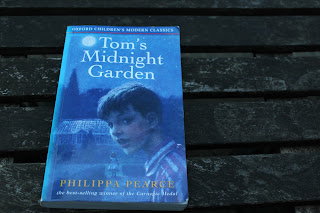

Branch Out World produces unit studies based on books. The unit studies come as a download. The study for Tom's Midnight Garden is longer and more detailed than the shorter picture book units. It runs to about 150 pages and is aimed at children aged between 8 and 12. The introduction states that younger children will need help whereas older children may be able to work independently. Each chapter in the book has its own section in the unit study. Each chapter includes

  • at least two activities
  • comprehension questions
  • Ideas for discussion or writing
  • extension activities including trips and art activities.
The download states that the study can be completed in six weeks if a chapter is done per day but can be extended to seven to eight months if every activity is used. It is suggested that students keep a log book of their learning.

The unit study starts with some learning about the setting. We particularly enjoyed the links with pictures of Ely.

Chapter one gives information about measles and making scones along with discussion questions. The ideas for writing are around the pros and cons of vaccination. The extension ideas are a letter to home from a trip away; pictures of Ely and a suggestion for making a private device for signing letters and art.

There is so much to do in this download. It isn't necessary to do everything provided but if everything were done, it would take most of each day.

Suggestions include science activities,
visiting a stately home garden,
 cooking, healthy exercise, learning about the periodic table and far more.

What did we think?
The download and suggestions were brilliant. There has been a phenomenal amount of work put into this guide.The book Tom's Midnight Garden really wasn't a hit with the children although they enjoyed the activities, making scones for a cream tea was particularly popular! Not liking Tom's Midnight Garden, of course, isn't a reflection on the quality of the unit study and wouldn't put me off doing another chapter book study from Branch Out World. We used the Explorer over the first half of the term studying about a couple of chapters a week. Using the guide to its fullest extent and doing a chapter per day would take several hours a day. I suspect that it would be better to use the guide more slowly and work over several months.

Another great product from Branch Out World!

Disclaimer: I received a copy of Tom's Midnight Garden for the purpose of this review. I was not required to write a positive review. The opinions are mine and those of my children.

If you enjoyed this post you may like to follow Delivering Grace by Google Friend Connect, G+,FacebookPinterestInstagram or e-mail.

Friday, 11 November 2016

Starting Home Education when your child has never been to School

This is part of my series on starting home education. 

Part 1
Part 2
Part 3

I actually plan to split this post into two:

  • starting home education when your child has never been to school
  • leaving school and starting home education
From personal experience of both scenarios, they are very different and should be treated separately.

This post is about the child who has never been to school. 

For the child who hasn't been to school, reaching formal school age is just a continuation of what has happened before. Often new home educators are keen to start formal education very young but, as far as I am aware, there seems to be little evidence that this is beneficial. This doesn't mean that structures can't be put in place.
  • Morning Time. Starting the day with God's Word, singing and memory work is a routine which can be put in place from very young. Children can learn to memorise short Bible verses and nursery rhymes from about two. When the children were little, we added picture books to this. Starting with picture books for the youngest, and working up to books for older children, seems to keep attention of wriggly little ones for longer. We  started reading aloud from when the children were babies and haven't regretted this especially with our most active children.  It is always worth choosing high quality picture books. The Five in a Row lists are worth considering as are the lists from Branch Out World. Authors that we particularly enjoyed were Shirley Hughes, Lynley Dodd (Hairy Maclary), Julia Donaldson, Allan Alhberg and Mick Inkpen. I have a list of 70+ picture books here
  • Spending time outside. 
  • Playing while talking with an adult
  • More reading aloud.
  • Making friends with other home educators. This is important for both mother and children. There are home educators to be found all over the UK and there is both a Christian yahoo group (Deut6v7) and facebook group.
It is very easy to add to this some phonics and maths. Much of our early maths was informal and involved weighing ingredients, working out numbers of people at meals and number of pieces of cutlery. 

Hands on science is also popular and easy to manage with kitchen ingredients. I recommend the Usborne Big Book of Science things to make and do.

When the children were school aged, we found books about starting home education. I know of two: My Mommy, my teacher by Johanna Bluedorn which seems to be out of print and Who's Not in School by Ross Mountney. The latter is currently in print. We also made a book of our own for one of the children with our own photos and words explaining why we home educate and what this means.

At this age our children particularly enjoyed the Five in a Row curriculum which allowed us to extend our enjoyment of high quality picture books. Branch Out World produces similar UK based materials. 

Trips are always popular. We found that this was particularly the case where they could be linked to a picture book that we had read. 

Rites of passage
Children sometimes miss certain rites of passage. One of our children felt rather left out because there was no school uniform. A trip to the local supermarket remedied this and led to a happy child. Several years on, the uniform has been dropped but I mention this as this topic often comes up in groups. 

We take beginning of school photos and try to do something special to mark the beginning of term. A picnic and enjoying an almost empty playground is appreciated.

Starting home education in this way is an easing into a learning lifestyle. 

Legally, there is no need to inform the local authority that you are home educating although there is a duty to provide an education that is suitable for the child's age, aptitude and ability. 

Have you home educated your child from the beginning? How did you find the initial stages?

If you enjoyed this post you may like to follow Delivering Grace by Google Friend Connect, G+,FacebookPinterestInstagram or e-mail.


Tuesday, 8 November 2016

The Positives and Negatives of Home Education

This is part of a short series about starting home education.

Part 1
Part 2

Home education has many benefits but it is essential to count the cost before you start. There are plenty of beautiful posts around which make everything look lovely and yes, there are great advantages and joyful days. However, we live in a fallen world. Parents are sinners and children are less than perfect. There are days when the children are difficult and their mother is struggling with hormones or seasonal affective disorder or both; the washing machine breaks down; a toddler scribbles on the wall and dad is going to be out until late. Yes, we've all been there and home educating certainly isn't going to make life perfect or make our children perfect. It may be used for our sanctification but that may well not be an easy process. 

So these are incomplete lists of some of the major benefits and disadvantages. I'm not trying to put anyone off but being realistic. 

Positives
  • Being able to keep to educational aims.This is usually accompanied by other benefits such as
  • Seeing each new stage.
  • One to one working.
  • Individualised work for a child's needs. 
  • Individualised work for a child's interests.
  • Enjoying being with the children.
  • Many educational trips.
  • Time outside. 
  • Holidays in term time.
  • Family cohesiveness.
  • Parental learning. 
When I asked my children about home education, they had a different list of benefits. High on their list was home cooking,
Recent Roman themed meal
more trips and flexible term times so that they can take birthdays off and arrange not to be working when there are special visitors.

Negatives
  • Cost-there is definitely an expense to home education. Even if you educate using library books, free trips and practice writing in the sand in the park there are expenses. The most major cost is the loss of a two income family. Other expenses include extra heating, meals, wear and tear on the house, educational materials and the cost of exams.
  • No peace!
  • Difficulty keeping up with housework.
  • Balancing home education with other responsibilities.
  • Managing home education with health issues. 
  • Managing opposition.
  • Home education takes time. 
  • Being counter-cultural. Christians are used to this to some degree but home education accentuates this.
Every family will have to balance the equation for themselves. Some of the issues are more weighty than others. Some issues need to be counted but are a cost willingly paid.

For example, home education takes time. This means that there is less time for other activities. We made a decision, after home educating for about eighteen months that the balance of home education, part time work for me, caring for an older relative and managing a household just didn't work.

There are stories around of people who home educate at night and at weekends. It might work for them but I know that our children are not going to manage their best effort at maths and phonics at night and that Saturday working is resented. We want to keep Sunday as the Lord's Day so working then just isn't on for us. Of course, learning happens in evenings and at weekends but this isn't the sit down and sort out a difficult concept type of learning. 

We decided that I would stop working and concentrate on managing the family and the children's education. It isn't a decision that we regret but was an important milestone. Other families manage this in a different way, perhaps, with both parents working part time or with a grandparent helping out. 

The perceived negative of lack of socialisation is usually a non-issue. Most home educators don't stay at home all the time and will meet up with other people both at home education groups, after school/weekend clubs, church activities, informal meetings and trips. Having had children in school and at home, I have found that the number of friends tends to be similar although children in school have more acquaintances. Home educated children also tend to have little regard for year group when making friends so may have friends over a wider spread of ages. 

What is important is to balance the all important reasons for home educating and other positives against the negatives. For Christians, this is a decision which takes much prayer and thought.

Who art thou that judgest another man's servant? to his own master he standeth or falleth.
Romans 14 verse 4

If you enjoyed this post you may like to follow Delivering Grace by Google Friend Connect, G+,FacebookPinterestInstagram or e-mail.


Tuesday, 1 November 2016

November Inspiration

We've had a beautiful half term. Now back to work!

This post has several maths links, perhaps, because I wanted to re-energise our maths time!

Bedtime math is a site which produces books with bedtime maths problems. Very conveniently, they also have a free app. Each problem has levels of difficulty and the easiest is usually very easy. 

Se7en have a great post with loads of resources for making maths fun. I'm not familiar with many of these but already have some of the books on my wish list! These resources would be great for schooled as well as home educated children.

Kate has a post about what to do when your child hates math. This post got me thinking about what was going wrong with our maths and the reason seems to be another which we are working on.

On to other subjects! Lynn has written just one piece of advice for starting nature journalling.

We all have days when it is impossible to follow our best laid plans. Bookshark has a post about Plan B homeschool days. The first about Reading Days reminds me of one of the days when I was too unwell to do anything except read from bed. I finished reading a long book and had a long, unhurried discussion with my daughter about China and the cultural revolution. 

We possess a large number of books. We have more books than bookshelf space which is a constant challenge-yes,books are doubled shelved, in odd cupboards and in piles. Nelleke has written about minimalism for homeschooling book lovers and I'm going to pluck up courage to go through the picture books!


If you enjoyed this post you may like to follow Delivering Grace by Google Friend Connect, G+,FacebookPinterestInstagram or e-mail.


Monday, 31 October 2016

Why Home Educate?

This post is part of my series on starting to home educate.

There are almost as many reasons to home educate as there are home educators. These reasons include


  • more time with the family
  • more time to play and be a child
  • not being squeezed into a mould
  • avoiding a restrictive curriculum
  • bullying at school
  • more concentration on academics
  • special needs
  • avoiding early academics
  • to allow world travel
  • to avoid being restricted by term and school times
  • didn't get a place at the desired school
  • health issues
  • individual, personalised teaching
I know that there are many more!

However, like many other Christian home educators, none of the above reasons is our primary reason for home educating. We believe that all education comes with a world view and we wanted to teach the children from a Christian world view. We don't believe that this will make our children Christian believers. We pray that they will come to know the Lord while they are young but we can't make them Christians. Our job is to be faithful and to bring them up in the nuture and admonition of the Lord. (Ephesians 6v4)

Obviously, the reasons for home educating will influence the way in which we tackle home education. Anyone taking even the most superficial view of the home education community will realise that it is very varied.

For many reasons it is worth setting out your own reasons for wanting to home educate. In fact, this is probably the most useful piece of advice that I was given. A short written statement for yourself will help
  • on difficult days.
  • you to be ready to explain when others ask why you home educate.
  • to provide a starter to help answer possible local authority inquiries.
  • decide on the way in which your days will be planned or not planned and which materials you will use.
  • to make sure that both husband and wife have the same motivations.
  • not feel threatened by people who home educate differently!
If you enjoyed this post you may like to follow Delivering Grace by Google Friend Connect, G+,FacebookPinterestInstagram or e-mail.

Wednesday, 26 October 2016

Looking back-starting to home educate

I'm planning a short series about starting to home educate. The aim is that this will be helpful for anyone thinking about home educating their children, those starting to home educate and also to people who don't home educate, and don't intend to, but are curious about home education. 

The topics that I hope to cover are


  • why home educate?
  • the positives and negatives of home education?
  • how to start.
It is now seven and a half years since we took Middle Son out of school and started to educate him at home. I was terrified. Whilst we had spoken to some people who were supportive, we had also had some major and serious opposition. Now, it is possible to have some perspective on this but it was far more difficult at the time.

Being rather nervous, I started out with a school style timetable and spent ages planning the academic subjects. Day one found me having to take my husband's mother to an unexpected appointment. When we came home, I discovered that my son took a strong dislike to the read aloud that I had chosen and that just writing PE on the timetable didn't really help me know what to do. The first term contained further challenges: missing school friends, trying to make friends in a home education group where there were already established friendships, disliking the maths book, more appointments, occupying my two year old and balancing education around a baby.

Of course, it wasn't all bad but that first term was tough and I probably made it rougher by being so anxious. So I'm writing this in the hope that others may avoid some of the pitfalls.

If you enjoyed this post you may like to follow Delivering Grace by Google Friend Connect, G+,FacebookPinterestInstagram or e-mail.

Saturday, 22 October 2016

Paris

For a special birthday celebration, Younger Daughter and I went to Paris this last week. Paris for the day was mad, exhausting and wonderful. Rather to my surprise, I ended up less tired than my daughter despite being over four decades older!

We caught an early Eurostar from Kings Cross St Pancras to Paris.

The highlight of our trip was the Musée d'Orsay. This is a former railway station which was converted into an amazing gallery after its platforms became too short for modern trains. It is full of the most amazing and famous paintings. Many of these were paintings that we had read about and seen as prints. 
The building itself reminded us of the clocks in Hugo Cabret which is set in another Paris railway station.

We were able to see right behind the clocks.

Seeing so many van Gogh paintings with the heavy brushstrokes and thick paint was amazing as well as seeing Degas' Little Dancer. We had read Lawrence Anholt's book about the Little Dancer but weren't prepared for how small this sculpture is in real life.

Next, we went on a boat trip and saw Notre Dame. I hadn't planned this as an educational trip but it turned into one. There was the Notre Dame with the Rose Window, gargoyles and flying buttresses that we had learned about in the Veritas Middle Ages, Renaissance and Reformation course last year.

We got off at the Louvre but didn't go in. We just wanted to see the pyramid.

Hot chocolate!

At this point, I was beginning to feel a bit guilty as my daughter was tired and we had several hours to go before our return trip. We pushed on, walking the Paris streets to the Opera and the shops.

Then a final trip up to Sacre Coeur.

After another sit in a cafe then we walked up although not quite to the top.
Paris in the dusk and rain.

I was grateful to my husband and Middle Son who held the fort at home so that we could go.

Tips:

  • a ten hour day in Paris is exhausting for a ten year old, and their parent!
  • despite the exhaustion, we are both glad that we went.
  • seeing the real pictures is the high point of art appreciation. I was glad that we had spent time reading James Mayhew's Katie books and Lawrence Anholt's Little Dancer as well as looking at other prints. 
  • the Orsay made us hand in our backbags and just carry valuables. They gave me a thin plastic bag for my purse and passports but this gave up. It would have been easier to have taken a small bag of my own.
  • our local library had up to date (2016) guide books with maps. I had Paris maps downloaded on my phone but ended up using the map in one of the guidebooks.
  • revising French with Duolingo was worthwhile although most people speak English anyway. 

If you enjoyed this post you may like to follow Delivering Grace by Google Friend Connect, G+,FacebookPinterestInstagram or e-mail.