Saturday, 8 March 2014

Jungle Doctor

Many, many years ago, I avidly read the Jungle Doctor books by Paul White. We had some at home and others were borrowed from the Sunday School library. Those borrowed were finished well before the week was out. In fact, these books were a major influence in my choosing to become a doctor. As it turned out,  medicine in England at the turn of the twenty first century wasn't completely the same as medicine in Africa in the 1930s: it was certainly tamer, hopefully safer and some of the illnesses were different. Still, the history taking, making a diagnosis and treating weren't so different and were brought to life in a vivid manner in these books.

Recently, we were given some copies of the Jungle Doctor books and Younger Daughter and I have been enjoying them

The Jungle Doctor series of books tell the fictionalised story of an Australian missionary doctor in Tanganyika (now Tanzania). Paul White really was a missionary doctor in this area from 1938 to 1941 and the stories are based on the experiences that he, and others had. As the stories are written in the first person, they give the impression that they all happened to Paul White but some were the experiences of his colleagues. The books were written after the Whites had to leave due to the illness of Mrs White. The books have a clear Christian message. Paul White and the other workers at the hospital were working for the Lord to save souls as well as bodies.

Reading these books decades later and after over twenty years in medicine, they are still appealing but more scary. The medicine is like a historical record: M and B tablets for meningitis, nothing disposable, plenty of improvisation without going through an ethics committee, aspirin for everyone for pain and so on.


Yet these stories live on. The medicine is dated, the society is dated but the stories are compelling. What makes them compelling? The humour-Paul White isn't afraid to laugh at himself; the reality-not all the stories have happy endings; the medicine-yes, it is old fashioned but the realities of desperately sick patients come across honestly; the action; the people and the love for the Lord who inspired the work of the Church Missionary Society hospital.

Recommended for children from about 7 and well, they are a fascinating light read for adults.

My copies are loved older copies but Christian Focus has republished these books. 

This is linked to Semicolon's Saturday Review of Books.

If you enjoyed this post you may like to follow Delivering Grace by Google Friend Connect, G+,Facebook, Pinterest or e-mail.


Wednesday, 5 March 2014

March Inspiration

I can't quite believe that we are two months through the year. February was a bit of a messy month for us, with family illness and getting used to carers coming in and out. Hopefully, March might be calmer.

Life is busy but I still have to read. I need time to read my Bible every day but also like to make time to read other books. Without a reading mother, the children loose a reading role model and I lose the chance to learn, improve our home and education and the opportunity to be a refreshed, vaguely sane mother. Crystal Paine has written a helpful post about how to fit more reading into the day.

Not everyone is able to home educate and many families have to make the big decision or whether to or not to home educate. Sarah, at Frugal Fun for Boys, has a post about just this decision. Do check out Sarah's blog as well, she has many helpful ideas.

Blogdom is full of blogs and posts about younger children and their education. Informative posts on home educating older children are particularly useful. This post, from Homegrown Learners, is about homeschooling big kids.

Concentration is an issue for children particularly in this age of multi-media so here is a thought provoking article on just this subject.

Last, Kirsty, from Young Hosannas, did a lovely unit study with her children about Wales. I'm married to a Welshman so we ought to do a similar study. It might be an excuse to visit Wales again.


If you enjoyed this post you may like to follow Delivering Grace by Google Friend Connect, G+,Facebook, Pinterest or e-mail.


Monday, 3 March 2014

Motivated Moms

Keeping the house clean and tidy is a constant challenge and one at which success often seems out of my reach. So you can guess that I jumped at the chance to review a Motivated Moms product.  Motivated Moms is a company that provides chore planning materials both as e-books and as an app. I reviewed one of the Motivated Moms Ebooks.
Motivated Moms Review

There are a variety of e-books available:
  • black and white/colour
  • page a day/half page a day
  • chore planner in two sizes with a week per page
  • with/without a daily Bible reading planner
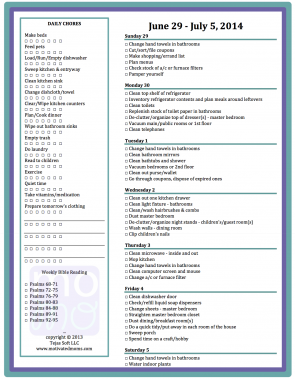
I chose a black and white half-sized chore planner with daily Bible readings. As I wanted this planner to be available in the kitchen, I printed it and filed it in an A4 folder. The planner prints on 29 pages with two weeks per page. The pages can be cut in half but I chose not to do this. The weeks on the same page are adjacent weeks. The last two pages are set up to be used as a two week menu plan.


Motivated Moms Review

Each week is dated with items on the left which need to be done daily and other items, for individual days, on the right. The Bible Readings are at the end of the left hand column and follow the Bible through book to book. Each item has a tick box beside it.

The items on the right hand side do not all come up weekly. Some appear monthly, some fortnightly, some weekly and some on alternate days.

Does it work?
Obviously, the system can help but doesn't do the work. I trialed this at a challenging time: Grandma, who lives with us, was admitted to hospital and then discharged home with carers calling several times a day as well as multiple visits from other health care professionals.

No, I didn't manage to do everything on the lists but yes, it definitely helped. Some items, such as sweeping my hallway have become part of my daily routine. Other items were broken into small chunks such as cleaning the refrigerator where only one shelf is cleaned per day. In my house, this vastly increased their chances of happening. The dishwasher door was cleaned because it was on the list and could be done quickly rather than waiting until I had a major kitchen blitz.

Now, please don't think my house is perfect. Anyone who has seen it will know quite how far from the truth that is but it is cleaner rather than dirtier. In view of the past month or so, that is quite an achievement and is thank you to Motivated Moms.

There were items that didn't apply. I thankfully put a line through taking medication and more puzzled, put a line through buying furnace filters. There were also a few items that I added: my stairs need vacuuming but this didn't seem to appear. Similarly, cleaning the bread bin was mysteriously absent. Motivated Moms comes from the US. Are bread bins a peculiarly English necessity?

What I liked about Motivated Moms 

  • My house is cleaner. A big plus!
  • It is simple and saves me planning. Another major plus for busy days.
  • It makes housework feel less overwhelming. Small chunks are good.
  • Items recur so if I don't clean the microwave it will reappear again soon and hopefully, get cleaned.
  • Having small amounts for each day.
  • The weeks start with Sunday not Monday.
What I didn't like about Motivated Moms

There is only one thing that I didn't like but that is a fairly large negative for me. This is that Sunday has a fair number of chores. We like to keep Sunday as the Lord's Day and do as little work as possible on that day. As a result, I don't have a list for Sundays and certainly don't want to be clipping coupons on the Lord's Day or even menu planning. 


I tried to do the Sunday chores on Saturdays which is the quietest day on this planner. I wonder whether the Sunday chores could be moved to Saturdays or Mondays for those who want to keep the Lord's Day special?

Overall, I have found Motivated Moms really helpful and plan to continue using the planner. My hope is that my house will continue to get cleaner: there is still a long way to go!

The Motivated Mom 2014 e-books are available at $8 (about £4.77).


Click to read Crew Reviews


Crew Disclaimer

If you enjoyed this post you may like to follow Delivering Grace by Google Friend Connect, G+,Facebook, Pinterest or e-mail.

Saturday, 1 March 2014

Maths Games for Younger Children

 I want to help my children like maths and mathematical concepts. 

These are games, suitable for children aged up to about 7, which my younger two have enjoyed. Please do comment with other maths games for this age group.

Games when out and about
These games need nothing more than a child and a parent and are ideal for journeys.


  • Counting games: How many red/yellow cars? How many Christmas trees? The latter is not so useful in March! How many step? How many cows? The variety is endless.
  • House numbers: one of my children learnt his numbers from the numbers on gates. House numbers are also particularly helpful for the concept of odd/even. Beware of roads where the odd and even numbers don't match properly!
  • Shapes: hunting for shapes while out and about. Extra shapes can be made with twigs.
  • Fizz/buzz. This makes tables fun. The multiples of one number are designated as fizz and those of another as buzz. For example, multiples of five are fizz and multiples of two are buzz. Counting then starts taking turns to count so counting from one to ten would go
one
buzz
three
four
fizz
six
seven
eight
nine
fizz buzz
 Obviously, other tables can be used or more added with different sounds. 

Games at home
These are games that my children have enjoyed.
  • The Spotty Dog game (Orchard Toys.) This game works on counting, number recognition and correspondence to six. A very neat and well designed game for younger children.
  • Ten Green Bottles (Orchard Toys) is another counting game but works on numbers to ten.
  • Various number puzzles.

  • Tell the time (Orchard Toys-I don't have any financial interest in this company!) helps with early time telling skills. It uses o'clock, half  past, quarter past and quarter to.

  • Pop to the Shops(Orchard Toys) uses toy money in a buying/selling game.
  • Playing shops and restaurants. My children have had hours of fun with these games and learn about money at the same time.
  • Sum Swamp (Learning Resources) was recommended by another home educator. We bought it for one of the children recently and have played it many times a week since. This game uses addition or subtraction using two dice and a plus/minus dice. Additional extras are the odd/even squares. This has been useful for number bonds and speed of working. A plus for me is that the game takes about 10 minutes so it is easy to fit in a quick game at the end of the morning or before bedtime.
  • Months puzzle: for some reason, learning the months isn't always easy but we have found this puzzle helps.
  • Geoboard: not really a game but something my children enjoy for making shapes. I have a large and a small board. The large board is better and easily used with the endless supply of rubber bands that seem to come via the postman.
  • Duplo/Lego: the possibilities are endless. We use this for patterns, counting, working out addition and subtraction, modelling multiplication, demonstrating graphs.
Over to you. Which number games do you play with your children?

If you enjoyed this post you may like to follow Delivering Grace by Google Friend Connect, G+,Facebook, Pinterest or e-mail.


Tuesday, 25 February 2014

Asia: Its People and History-a review

My children have heard about some Asian countries from friends and from church. Some of these places have come alive from friends' stories, pictures and hospitality but other countries were little more than names. In view of this, I was delighted to have the opportunity to review a new book, published this week: Asia: its People and History by Bonnie Rose Hudson. This book looks at six Asian countries from a Biblical worldview and encourages prayer for persecuted Christians.


The countries are

  • Laos
  • Bangladesh
  • Nepal
  • China
  • Iran
  • Vietnam
The countries can be investigated in any order.

We used this book for reading in our morning Bible Time. So far, we have learnt about Nepal and Laos. Nepal is a country that the children knew a little about already, from church, so it was helpful to build on this whereas Laos was a mystery to both me and the children. We have just finished learning about Laos and hope to "travel" to China next. 

The book is actually set out in weeks, with a section to be read each week, but it worked well on a daily basis. Each country has a story about a child who lives there with discussion questions. There is a portion on the history of the country and another on its geography. There is a clear emphasis on what conditions in the country are like for Christians and an encouragement to pray. The end of each section has suggested activities which are linked to the activities section at the end of the book. These include crosswords, map puzzles, word searches and more. In addition, there is free bonus content on Bonnie Rose Hudson's site.

The suggested age range for this book is 8-12 although the website states that it can easily be used for older students. My younger two children, at 5 and 7, are a little under the suggested range. It was still quite possible to use the book with them. We took our world map off the wall to check the location of the countries each day and focused on memorable facts e.g. Mount Everest is in Nepal and Nepal's flag is two pennants. We didn't do the written activities as these would have been difficult for my younger children. The stories of the lives of ordinary children appealed to them. Reading the book daily helped with retention of the story and of facts.


This book is an ideal resource for Christian families, whether home educating or not, who wish to find out more about Asian countries and what it is like to be a Christian within those countries. Definitely recommended.

The book is available as an ebook from The Old Schoolhouse Store at $6.95 (about £4.16). There is a promotional code here  02asia14! which gives 25% off the cost until 15th March 2014. It is also available from Amazon.co.uk at £4.27 or from Amazon.com at $7.11. In addition, it is available from Smashwords at $6.95. At Smashwords it is available in formats for Kindle, Nook, Sony Reader and ibooks. It will soon be available as a paperback from CreateSpace.

Bonnie Rose Hudson hopes to write a further similar book about other Asian countries. She would like people to leave suggestions about which countries she should cover, on her website.


If you enjoyed this post you may like to follow Delivering Grace by Google Friend Connect, G+,Facebook, Pinterest or e-mail.

Monday, 24 February 2014

Home education and technology: a love-hate relationship

Technology and, in particular, the internet, is an important part of our home education.

We use on-line teaching programmes both for the younger children and for Middle Son's home education. This brings many benefits:


  • the children can learn languages that I can't begin to teach
  • they can access specialists where I only have basic knowledge
  • one child can be working on something while I can devote my attention to another child
  • the children become familiar with media that they will need in the future
  • practice can be provided in a fun way.
  • there is something available for the children when I have to manage hospital appointments or talk to district nurses.
The programmes that we use most are
  • Reading Eggs for the younger two children. The children love this extra way of practicing reading. I don't think that it would be a sufficient programme on its own but is helpful for re-enforcement. 
  • IXL for maths practice.
  • KinderBach for music
  • Northstar Worldwide for Middle Son's German and History.
We are beginning to use a Kindle for my early reader. It is much easier to read large print and so easy to change the font size. This is something that we are likely to use more, in the future.

The other major use of the internet is for my research and planning. It is so helpful to be able to download a chapter of a new curriculum in order to assess this. I also make use of Pinterest in planning. (My Pinterest page is here.)

However, I do have some reservations.
  • It is easy for the children to finish their work and then change to a computer game or children's programme. Before, I realise the whole of their break has been spent in virtual reality rather than imaginative play. 
  • Educational programmes can encourage the children to become rather obsessed with computers and computer games. I am keen to try to keen the younger children from spending excessive time on computers rather than interacting with people and making their own occupations.
  • The programmes that we use, for the younger children, don't require much writing and no handwriting. I prefer to use them as an add-on rather than as the main source of teaching.
How do you use technology with your children? What safeguards do you put in to ensure balance?

For more posts on the topic of Technology in the Homeschool click on the graphic below (available from Wednesday 26th February).
Homeschool Technology

If you enjoyed this post you may like to follow Delivering Grace by Google Friend Connect, G+,Facebook, Pinterest or e-mail

KinderBach: for early music lessons- a review

Music is a subject where I knew that we weren't doing as much as I wanted so I was delighted to have the opportunity to review The KinderBach online piano membership withTeacherCorner 
Kinderbach Review

from KinderBach.


Kinderbach Review
KinderBach is an on-line programme which teaches young children the basics of music, specifically of the piano or other keyboard instrument. The programme's own description is
Piano Introduction for Young Beginners in Home Educating Families
There is another version of the programme for group settings.

KinderBach is designed for young children aged 3 to 7. I used it with my two younger children aged just five and seven. Youngest Son, aged five, had had virtually no music teaching before using KinderBach whereas his sister had had some early American organ lessons so was aware of the names of the notes and simple written music. We used the programme each week day, after lunch.

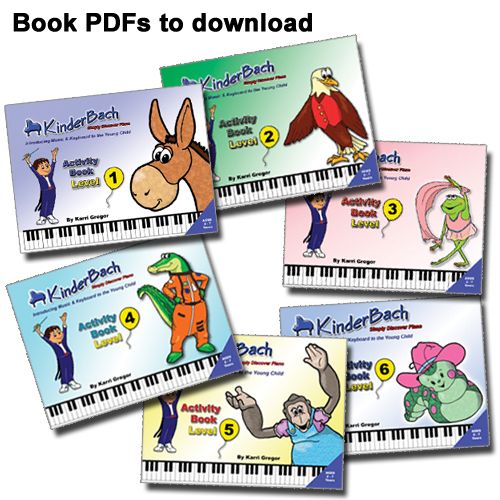
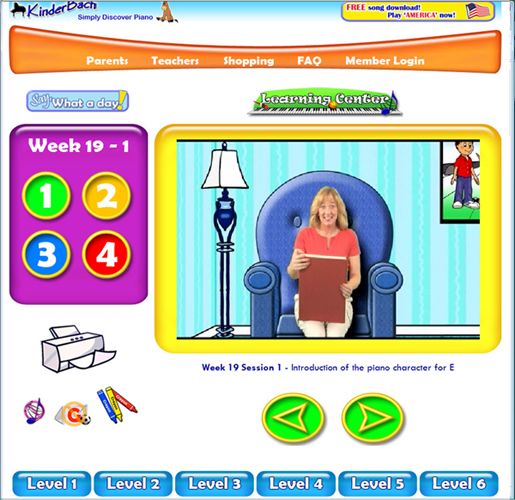
The programme uses a log-in name and password. Once the actual on-line portion is accessed, there are six levels each of which is divided into ten weeks with four lessons per week. There is an activity book to print off for each level.

Kinderbach Review
The lessons are short: typically the on-line lesson lasts 4-6 minutes and an activity page to go with most lessons. The activity sheets may be a simple tune to play, loud/soft notes to distinguish, cards to make to place on the keyboard, beat notes to colour and  much more.

Each week's lessons has a very short introductory video with an outline of the week and what is needed. Generally, the items required seem to be coloured pens or crayons, a rhythm instrument and a piano or keyboard of some description. Some weeks require "cardstock". I found that it was easier to print the items which were said to need card on paper and then laminate. The videos explain that many household items can be used as rhythm instruments so there is no need to go out to buy something special to use. We used saucepans, pieces of wood and surfaces to bang.

The lessons are taught by Karri Gregor who has written the course.

Kinderbach Review
KinderBach is completely self-explanatory and assumes no musical knowledge at all. The children are taught their way around a keyboard with the help of characters, Frisco and Dodi the Donkey.

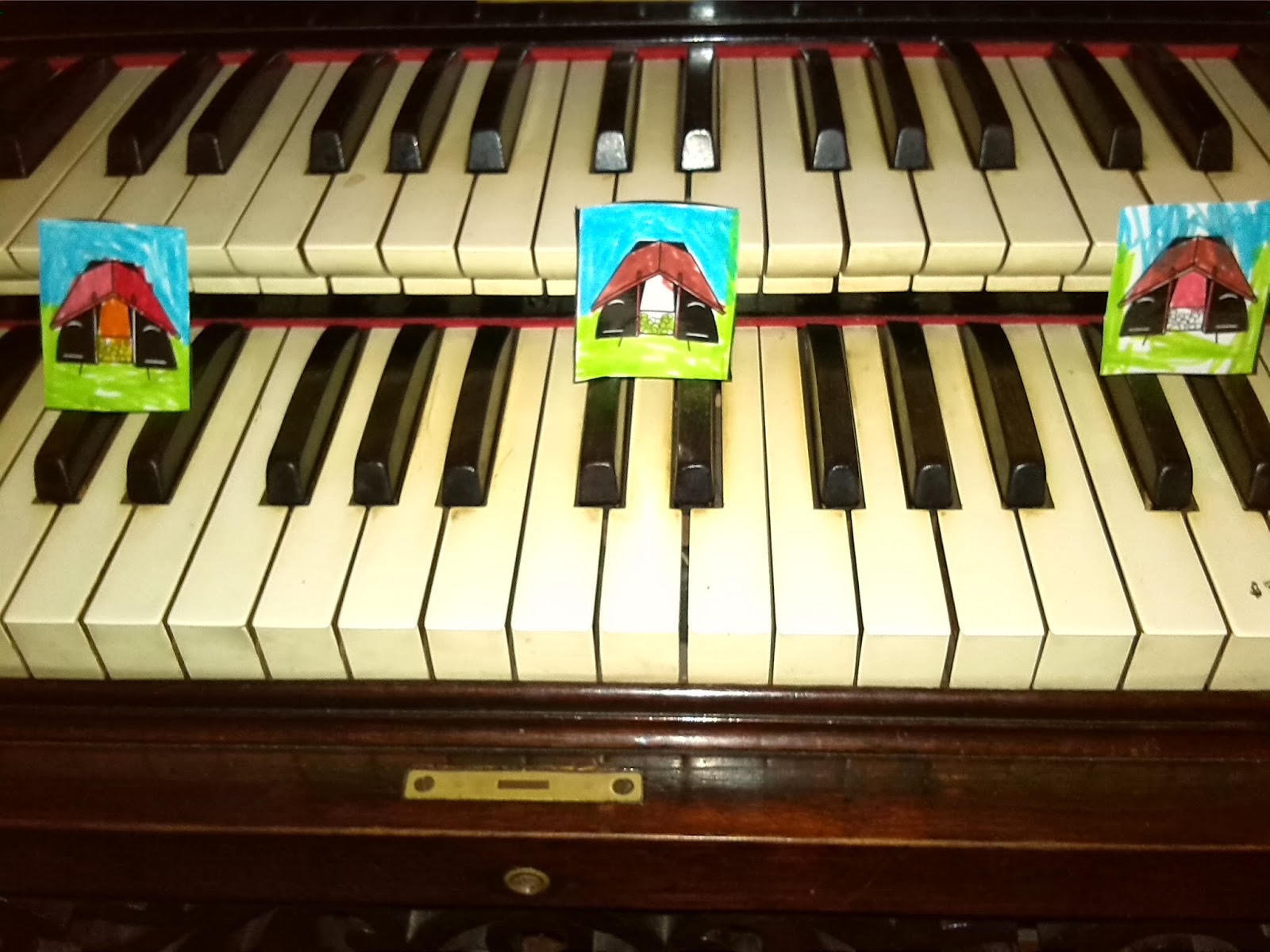
The children colour and cut out cards to find notes on a keyboard:
 C# and D# are Dodi's House

F#, G# and A# are the Train Station.

They also play simple matching games to teach finger numbering.

In addition to the lessons and activity books, there is a Teacher Corner 


Kinderbach Review
with lesson plans, a Teacher Aid Book with more printable sheets to back up the lessons and mp3s of the songs.

What we liked about the programme


  • It was really easy to implement.
  • The children enjoy it, particularly, Youngest Son who had virtually no previous musical teaching.
  • The sessions are short. Younger Son often asks for more than one lesson per day.
  • Apart from a keyboard of some description, very little equipment is needed.
 What worked less well for us


  • I had planned to start Younger Daughter, aged 7, on a higher level in the programme. This didn't work out because the characters and nomenclature used in KinderBach, really needed to be known before she could tackle these levels. She watched the videos with her younger brother but I wasn't able to use KinderBach  to advance her playing.
  • The workbooks tend to involve a fair amount of colouring. Sometimes, this can be simplified to circling the loud or quiet sound in a particular colour which can be useful for little boys who prefer not to colour!
Overall

We like KinderBach and plan to continue using it. This is an ideal programme for parents who don't feel able to teach music themselves and for children with no previous experience of reading music or using a keyboard. It is set up in a way that makes it easy to use at home. 
Recommended.


Costs

A year's membership of KinderBach plus Teacher Corner is usually $130 but is currently discounted at $95.88 ( about £57.63) which comes to $7.99 (about £4.80) per month.

For other reviews, do visit the TOS Crew website.


Crew Disclaimer