Thursday, 24 March 2016

Nature Pen Friends!

Lynn Seddon, author of the lovely Exploring Nature with Children, will be hosting a Nature Pen Friends swap on her blog. 

Sign ups will begin on April 17th through to April 23rd. Lynn will email you the following week with your Nature Pen Friend's details. You and your children can go hunting for nature treasures from your own special corner of the world, then pack them up to send to your Nature Pen Friend.

Head over to Lynn's blog: www.raisinglittleshoots.com to find out more, and to register your interest.
If you enjoyed this post you may like to follow Delivering Grace by Google Friend Connect, G+,Facebook, Pinterest, Instagram or e-mail.

Tuesday, 22 March 2016

A Fortunate Life

Over the last few weeks, I have been reading and screening books for the children's book club I run. Next term's theme is Antarctica and Oceania. One of the books that I have read, A Fortunate Life, was already sitting on our bookshelves but I had never read completely before.
A Fortunate Life (Puffin story books)

My rating: 4 of 5 stars

"A Fortunate Life" is the life story of Albert Facey who was born in Victoria in 1894 but spent most of his life in Western Australia.

Albert's childhood was characterised by dreadful poverty and the desertion of his mother leaving Albert in the care of his grandmother. Due to the family's financial situation, Albert went out to work aged eight, sadly, to a home where he was used a slave labour and eventually, beaten so severely that he almost died. Albert has many further adventures: another settler who doesn't pay him; a couple who want to adopt him; cattle herding in the outback and well digging in dreadfully dangerous conditions. Albert meets his mother again who seems more interested in his money than her son. 

At the start of World War One, Albert was twenty and volunteered. He was sent to Gallipoli where he fought in the trenches before being severely injured and invalided home. Once home from the War, Albert meets a previously unknown girl who had knitted the socks sent to him at the front and marries her.

This is a fascinating book. I learned much about Australia that I hadn't known before but the poignancy of a  child sent out to work with no one to look out for them and no way of obtaining an education, will stay with me for a long time. 

This is a children's edition. I haven't read the original version. I had hoped that this edition would be suitable for a book club for children aged 8 to 12. Sadly, I think that it would be better for teenagers. The physical abuse at the first job and the description of the First World War conditions in Gallipoli are probably better kept for older children. So to continue the hunt for books!


View all my reviews

If you enjoyed this post you may like to follow Delivering Grace by Google Friend Connect, G+,Facebook, Pinterest, Instagram or e-mail.

Saturday, 19 March 2016

First things First


This is the last post in the Virtual Curriculum Fair 2016. 
My previous posts are 


This week's topic is Seeking Beauty: The arts and everything that adds beauty to our World. 

This year the Virtual Curriculum Fair is hosted by Laura @ Day by Day in Our World, Chareen @ Every Bed of Roses and Kristen @ Sunrise to Sunset. 

My topic for this week is about the most important things in life which add true beauty: spiritual things. We like to start our home education day with 

  • prayer
  • reading from a book about the Bible
  • Bible memorisation
  • singing
We do read from the Bible itself at family worship and in the evenings but for this particular slot, we use a children's book about the Bible.

When the children were preschoolers, we used
  • 365 Bible stories by Carine Mackenzie. We found that this book lasted less than a whole year as the children tended to want more than one story.
  • the New Testament series by B. Ramsbottom. I've just linked to one but the others are on the same website. 
As they grew, to reception age, we used these plus
  • titles about individual characters from Christian Focus. These are in two series: Bible Wise and Bible Time.
Once, the children were around six, we read
We have used the Bible Roadtrip before and I am hoping that we can start using this again, in September.

For Bible memorisation, we use

We sing hymns that we sing in church and particularly ones that the children may not know well but, as well, often use our church children's hymnbook. As with any hymnbook, there are some that are sung far more often so we try to have a mixture of hymns that are well known and those that are not. We use a music edition and this definitely helps with singing less known hymns. If you are unable to play even a little then it is worth trying to find a recording to use to sing along. 

It is all to easy to be diverted from the most important things in life and this certainly applies in education. Having a habit of starting the day with the Lord and His Word helps to focus my mind on the most needful things and we pray will direct the children to the Lord.

Please visit the other blogs who are taking part in this week's Virtual Curriculum Fair. Chareen @ Every Bed of Roses - Seeking Beauty Through the Arts
Yvie @ Gypsy Road -Painter Song
Sarah@ Delivering Grace - First Things First
Laura @ Day by Day in Our World - Add An Element of Beauty with Fine Arts in the Homeschool
Lisa@ Golden Grasses - What Are We Fighting For?
Annette @ A Net In Time - Art, art, and more art
Kristen @ Sunrise to Sunset - The Sounds of Music
Kym @ Homeschool Coffee Break - Music and Other Beautiful Things

If you enjoyed this post you may like to follow Delivering Grace by Google Friend Connect, G+,Facebook, Pinterest, Instagram or e-mail.

Friday, 18 March 2016

March Learning

March has been a major learning month except for the week when the younger children and I were all ill. That week,we worked a bit and slept a fair amount while I consoled myself that if the children had been in school, they wouldn't have been well enough to attend. Suddenly, the next week, everyone felt better and we seemed to manage so much more.

We have finished my version of Year 3 science using the National Curriculum (NC) outline. My feeling was that the  NC outline was quite thin and I had to add, and extend, a fair amount to make the topics interesting. It turned out OK but I would like to add more literature, visits and videos to a future attempt. I wasn't in a big rush to push onto year 4 science, partly, because writing my own programme was quite time intensive so after a fair amount of thought and some helpful advice from an on-line home educating group, we have decided to use the Apologia Elementary book: Swimming Creatures of the Fifth Day. This is a topic which really appeals to the children and is less affected by not being in the US than the Flying Creatures book. So far, the book is going well but it is very early days! 

To mark the start of the new topic, we went to the London Aquarium.


Our nature walk from Exploring Nature with Children that week was about frogs and toads so we went to a local garden with a pond. This fitted in well with the general topic. We saw toads but no toad spawn, as yet.

I've been working on the content of our Circle Time/Morning Time. Pam Barnhill's podcasts have been helpful with this although I haven't finished listening to them all. This time has been useful for making sure that we actually do music and art appreciation and some other extras, along with its first and most important task of starting the day with prayer and learning about the Bible. 

These are the resources that we used one day, this week, along with some A4 sheets of Bible memory work and some sheets that I used so that we could talk about some of the words used by Shakespeare. 

If anyone has recommendations for books to go with music appreciation, I would be grateful. We are currently using the Ladybird composer books which work well but I am aware that these will only last a few more weeks. I have wondered about using Classics for Kids but haven't decided yet.

This week has been Shakespeare Week. We used some of the many resources on the website: the virtual tour of Shakespeare's home, a radio rendition of Henry V and talked about words from Shakespeare each morning using a worksheet from the Shakespeare site although we used this more as a discussion guide. Poetry tea did include a Shakespeare sonnet although also plenty of other much more modern poetry. I do struggle with the content of some of Shakespeare's plays although I know that he had an important influence on the language. At present, I am reading, rather slowly, Ken Ludwig's book How to teach your children Shakespeare which is a helpful background to Shakespeare for this non-literary person. Hopefully, after that I will read a Christian overview of the Bard.


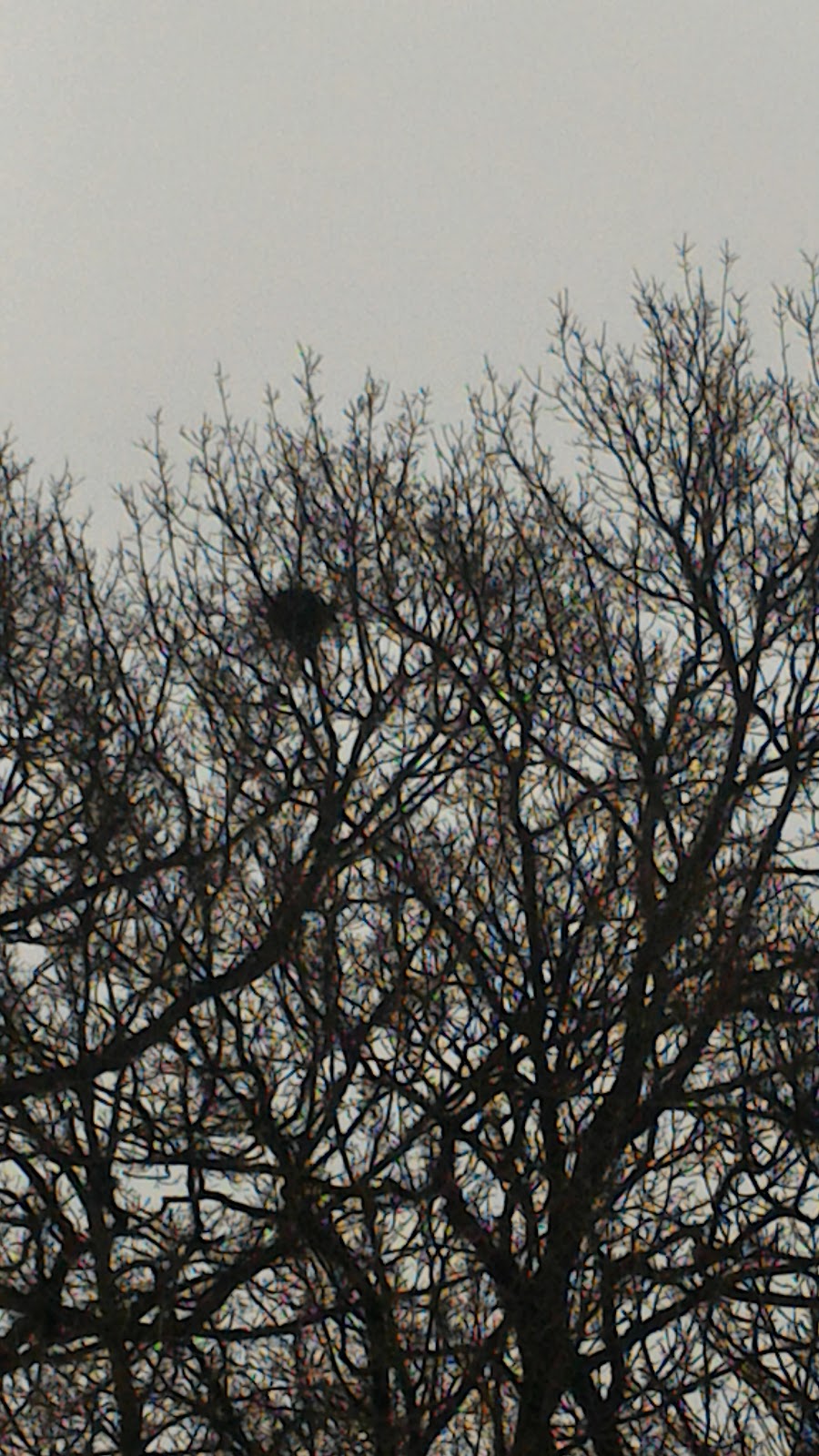
Today, has been our Spring nature walk, at almost the Equinox. It was cold but we took a warm picnic and rather to my relief, sat on a log rather than the very muddy ground. The children loved their time outside and we stayed out far longer than I had thought: hot chocolate in a thermos definitely helped!
The children took pictures for the scavenger hunt. This is the bird's nest.

I'm pondering Charlotte Mason style education. Ambleside on Line has a useful explanation. Some of the elements work really well for one of my children, in particular, but I'm less happy with some of the underlying ideas about the child. Doubtless, we will end up using the short lessons, narration, literature rich and outdoor time elements and not use some of the rest. Charlotte Mason's original works need to go on my reading list!

Nearly, time for our Easter break! 

If you enjoyed this post you may like to follow Delivering Grace by Google Friend Connect, G+,Facebook, Pinterest, Instagram or e-mail.

Tuesday, 15 March 2016

The Bible Smuggler

The Bible Smuggler is a book, by Louise Vernon, which has been sitting on our shelves for sometime. We purchased it some years ago for our older children but I have only read it to the younger two recently.

This book is historical fiction around the life of William Tyndale who translated the Bible into English. It is told by the means of a fictional boy, Collin Hartley, who becomes Tyndale's servant and helper. The story starts in Little Sodbury where Tyndale was a tutor then follows his journey to London and his exile on the continent of Europe living in Wittenburg, Cologne and Worms. Tyndale's story is exciting enough but Louise Vernon manages to finish most chapters on a cliff hanger which lead to cries of more!

Obviously, the question with historical fiction is how much is fiction. I'm no Tyndale scholar but this book seems to follow what is known of Tyndale's life faithfully although details around Collin are fictional.


This is an ideal book for primary aged children to learn about one of the most important characters in British history and much of whose translation went on to be used in the Authorised Version.

If you enjoyed this post you may like to follow Delivering Grace by Google Friend Connect, G+,Facebook, Pinterest, Instagram or e-mail.

Monday, 14 March 2016

The Icing and the Cake-a method of studying history

This is the third post in the Virtual Curriculum Fair 2016. This week's topic is Exploring Our World: Social Studies and more Science. This year the Virtual Curriculum Fair is hosted by Laura @ Day by Day in Our World, Chareen @ Every Bed of Roses and Kristen @ Sunrise to Sunset.
 I am writing about our cake and icing method for studying history although it can also be used for other subjects.

We are a history loving family. My youngest daughter particularly enjoys history so enlarging the depth and scope of history learning has been a pleasure. The way that we have done this is putting the icing on the cake. The regular history curriculum that we use is the cake and the extras are the icing.

The current cake is the Veritas Press Self-paced Middle Ages. We previously used the Veritas Press Self-Paced Greeks, Romans and New Testament history. I have written about this curriculum before and this is something that we have really enjoyed using. Sadly, though the next year, on the Veritas course becomes more US based. We gave Younger Daughter the option of continuing with Veritas or going onto more world-wide history with Story of the World by Susan Wise Bauer and she decided to go for the latter so we are due to start volume 3: Early Modern Times when we complete this self paced course.

To make the icing, I list each week's work from the Self-Paced course. This is the week's flash card title. I plan to list the chapters from Story of the World.  The easiest thing is to write a table in Word with the title, suggestions from the literature selections for that week; other books we wanted to add and other activities. I try to do this before we start the course but continue adding as long as we are using that particular scheme.

In order to find the additional books, I use


In order to find additional activities, I use
  • Veritas self-paced additional ideas
  • Story of the World activity board
  • my history Pinterest board
  • local activities and sites.
Helpful sites for finding activities and sites, in  are
Whilst we try to keep the backbone of the history to its rightful week, some of the extras, particularly trips, can get displaced a week or so to fit in with other commitments. Also, if we are busy or someone is unwell, then these are the parts of our planning which can be dropped or postponed.

In addition, we take advantage of seasonal events which may not fit into the current history quite so well. These include


I am always looking for more ideas. Please let me know about how you add to your history curriculum


f you enjoyed this post you may like to follow Delivering Grace by Google Friend Connect, G+,Facebook, Pinterest, Instagram or e-mail.

Wednesday, 9 March 2016

Wonderfully Made: God's story of Life from Conception to Birth

I was delighted to have the opportunity to review Wonderfully Made: God's Story of Life from Conception to Birth by Danika Cooley. This is a new hardback picture book, from Christian Focus, which looks at how a baby is formed and shaped, before birth.

 This book is designed for children from 2 to 11. It is labelled as read aloud from 2-6 and "read myself" from 8-11.  Not quite sure what happened to the seven year olds! It is written as a mother talking to her child and is from a clear Christian perspective.

The Bible is open about life, marriage and physical relationships. As a Christian parent, I want to present information about this part of life to my children but within the context of a Biblical worldview. Wonderfully Made is a help to parents in this task.


The pregnancy is taken on a week by week basis, including that there isn't a baby in weeks 1 and 2. For each week or in some cases, set of weeks, there is a description of the size of the baby, for example, the size of an apple or a peach. There is also detail about development of organs; what the baby would be doing and a little about what the mother will notice, for example,
It felt like I had a little butterfly in my belly.

Each page has a relevant Bible text, taken from the English Standard Version and is illustrated by pictures of a child at the relevant stage of development. The pictures are accessible and clear  but not scary for the squeamish.


I read this book aloud to my younger children aged 7 and 9. The seven year old was particularly impressed with the book and its illustrations. I read the book in one sitting but for younger children, it would probably be better to divide into smaller sections. The design of discussing a week or two at a time makes this easy to do.

What I particularly liked about the book
-there was honesty about conception and a very clear placing of this within marriage. When your dad and I joined together to show the special love we have as husband and wife.  The pictures on the page about conception are of sperm swimming to an egg on one side of the page and opposite some happy children.
-the excitement around a new child and that the glory is clearly attributed to God.
-the comparisons of the size of the baby. A baby the size of a pencil sharpener made me laugh.
-the plentiful illustrations related to the text.
-the detail about development which would especially appeal to a family where a baby is expected.
-the lack of gory detail around birth although acknowledging that it is a difficult and painful process.
-referring to the new birth.

Details that I liked less
- as an ex-doctor, I found the use of the word womb rather than uterus grating.
-use of Imperial measurements. I converted these to kilograms and centimetres for my children although weighing out a similar weight object would have been better.
-we don't use the ESV either at home or church.

Overall, I liked this book and  highly recommend it. (5 stars *****)  In terms of age range, I suggest that it is ideal for the middle of the recommended age range. I think that a two year old might struggle although if it were read slowly and several times in the context of a pregnancy then it might well be useful. This book should be in the library of every Christian family.

Wonderfully Made is available from Christian Focus for £6.99. It is also available on Amazon and from Christian booksellers.
Disclaimer: I received a copy of Wonderfully Made for review purposes. I was not required to give a positive review. The opinions are my own.


If you enjoyed this post you may like to follow Delivering Grace by Google Friend Connect, G+,Facebook, Pinterest, Instagram or e-mail.