Saturday, 5 March 2016

Learning Multiplication Tables

This is the second post in the Virtual Curriculum Fair 2016. This week the theme is discovering patterns: Mathematics, logic and Science.
This year the Virtual Curriculum Fair is hosted by Laura @ Day by Day in Our World, Chareen @ Every Bed of Roses and Kristen @ Sunrise to Sunset.


I've written about science very recently so have decided to write about learning multiplication tables.

We use spiral maths curriculum so don't spend all our time learning tables. I also know that there is debate about the importance of learning tables. We take the view that knowing multiplication tables well is a useful skills, and indeed it is something that we use in everyday life but that the process of learning them doesn't need to hold up the rest of maths learning.


So how do we go about learning tables?
  • a separate tables session each day. We try to include something in morning time and also add a short tables session to the beginning of maths for the day.
  • Daily learning seems to be the key plus variety to keep up interest.
Before the child starts a table, it is important to make sure that they understand the concept of repeated addition or x lots of. It is easy to demonstrate this visually particularly with the simpler tables for example,
  • 2x table: pairs of shoes, 2 pence pieces, socks, Duplo, knives and forks.
  • 3x table: Duplo, knife, fork and spoon.
  • 5x table: 5 pence pieces, Duplo,fingers and toes.
  • 10x: 10 pence pieces, Duplo, fingers and toes.
We often initially say the table as 2 lots of 2 are 4 etc.

When we first say the table, we use a poster or blackboard and I say the table with the children. 

Practice:
|Regular, daily practice pays off. Some children need loads and loads of practice and some children seem to pick up tables more easily. We have children of both types!

Ways to practice tables:
  • 1-100 square and colour in multiples. It is worth drawing one square and photocopying a few!
  • Skip the table with a skipping rope-I don't know why this works but it really seems to help.
  • We have a gadget called Digitz which is a loud, electronic way to practice and popular with the children. This was a gift and I'm sorry, but I don't know where this can be obtained in the UK.

  • Writing out the table.
  • List of mixed up table questions.
  • Saying the table against a timer. I only use this when the child wants to practice in this way but it has added fluency for one child. 
  • Schofield and Sims times table work book. This are cheap workbooks, published in the UK. Each page has three sets of ten mixed tables questions. Book one has tables 1,2,3,4,5 and 10 whereas book 2 has all tables up to 12. One of my children does a set of 10 questions most days. The questions use mathematical vocabulary e.g. product and squared and the questions get harder through the book.
  • Throw two dice and find the product of the numbers. To work on tables up to 12 either use a 12 sided dice or as we do, roll each dice twice. Add the two numbers and then multiply.
I know that some families have successfully used tables songs. I have borrowed some from the library but they just didn't work for us although they might well work for other people.

Please add other tables learning ideas in the comments.


This is a list of other bloggers who are participating in this week's VCF. Please do pop over and read who they have to say.
Chareen @ Every Bed of Roses - Thoughts on Math and Science
Kristen @ Sunrise to Sunset  - From Counting to Calculus
Laura @ Day by Day in Our World  - How We Approach Math in This Homeschool Year
Annette @ A Net In Time - Struggling with Math, Loving Science
Annette @ A Net In Time  - Lego Pulleys and Levers
Yvie @ Gypsy Road Hands - On Math with Special Needs Learners
Chelli @ The Planted Trees  - Chemistry Using Living Books
Lisa @ GoldenGrasses  - An Appalling Lack of Curiosity
Edie @ Carter Chaos  - Our Favorite Ways to Study Numbers
Tracey @ A Learning Journey  - Robot Area and Perimeter Art Project
Jennifer @ A Glimpse of Our Life  - Math and Standardized Tests
Jen @ Chestnut Grove Academy  - Discovering Patterns: Mathematics, Logic, and Science
Sarah @ DeliveringGrace  - Learning Multiplication Tables
Kylie @ Our Worldwide Classroom  - Multisensory Multiplication
Kym @ Homeschool Coffee Break  - Science and Stuff
Kemi Quinn @ Homemaking Organized  - Math in Our Homeschool for a Later Elementary Organized Reader
Joelle @ Homeschooling for His Glory  - Math and Logic - Our Steady Path
Laura @ Four Little Penguins  - Math and Science Love

If you enjoyed this post you may like to follow Delivering Grace by Google Friend Connect, G+,Facebook, Pinterest, Instagram or e-mail.

Friday, 4 March 2016

Bronze and Sunflower

This has been a bit of an ill week here but it did give opportunity for some reading.

Bronze and SunflowerBronze and Sunflower by Cao Wenxuan
My rating: 5 of 5 stars

Bronze and Sunflower is a beautiful children's book, translated from Chinese. It is set in China in the cultural revolution.
Sunflower's sculptor father is sent to a labour camp, known as cadre school, during the Chinese cultural revolution. Sunflower goes along with him but as there is no provision for children, is left to fend for herself, making friends with a mute boy, Bronze, from the nearby country village.

Sadly, Sunflower is left completely alone but is taken in by Bronze's family. Bronze's family are desperately poor and survival is a struggle, particularly, as some natural disasters hit the village. The poor family are united in their struggle to survive and the rest of the family, in their struggle to afford Sunflower's education

I won't spoil the ending but it is both poignant and enigmatic.

Bronze and Sunflower had a slow start but it is worth persevering. I read the book with my nine year old. The Chinese cultural revolution is not a familiar period in history to her so this was an ideal introduction. The book is gentle and whilst there are some deaths, the book is not violent. The way in which society was set up with great civic control, no obvious religion and strong family bonds are places for discussion but there are plenty of other points for pondering.

We were left checking the internet to see whether any other of Cao Wenxuan's books are available in English. Highly recommended for an insight into a different culture.

View all my reviews

If you enjoyed this post you may like to follow Delivering Grace by Google Friend Connect, G+,Facebook, Pinterest, Instagram or e-mail.

Tuesday, 1 March 2016

March Inspiration

March has arrived. Now Spring is on the way despite the coughs that seem to be besetting us, at present. Today, we were due to go on an outing and I think, for the first time, we decided to postpone until the children were feeling better. So today has been a slow day, at home.


Unusually, I have been listening to podcasts, not many, as it seems to be difficult to find uninterrupted time but a few while cooking or cleaning. Probably, the most useful that I have heard, so far, is Pam Barnhill talking to Sonya Shafer about narration. There are so many useful hints and ideas here.

Several of these podcasts are about Morning Time but for a description of how Morning Time can look, it is worth reading Dawn's post.

Finding the optimal way to work seems like searching for a needle in a haystack. This article has some pointers.

This year, I set myself a couple of reading challenges and have been finding keeping up challenging. Se7en has a post about managing to read more. I love the chapter per day idea.


Finally, Jacinda has written Confessions of a Homeschool Graduate: compulsory reading for home educators!

Happy March!

If you enjoyed this post you may like to follow Delivering Grace by Google Friend Connect, G+,Facebook, Pinterest, Instagram or e-mail.

Monday, 29 February 2016

Making a home of Book lovers


This is the first post in a series of four as part of the Virtual Curriculum Fair 2016.

 This year the Virtual Curriculum Fair is hosted by Laura @ Day by Day in Our World, Chareen @ Every Bed of Roses and Kristen @ Sunrise to Sunset.

The theme of this first week is around language arts. This covers literacy, English language, English literature and also other languages.
My post is not about a specific curriculum but instead  around ideas and resources that we use to help develop an interest in books.

I love books and would like to share this with my children. One of the main aims of our home education is for the children to read well and enjoy books.

This post is just about  loving books rather than learning to read. These are ideas that we use but there are plenty more around. My Pinterest book board Books has some inspiration.

Reading Aloud
Loving books starts early, with reading to babies and toddlers. We used to read many books each day. In particular, we used the idea of Five a day where the same five books are read each day. Five a day was just the tip of the iceberg and we read many, many more each day. This is a list of some favourite picture books. Searching Five a Day and picture books on Delivering Grace will bring up many more lists! Some of my ratings are on my page at Goodreads.

For some time we used the Five in a Row curriculum for activities connected with some particularly high quality picture books. We loved this curriculum and I would warmly recommend using it with children from about three to six. We still have the picture books that we used and these often come out when the children are tired.

The Five in a Row website can be found here.
My page with Five in a Row activities is here and I have a Pinterest board for Five in a Row.
A UK home educator produces similar unit studies on books as Branch Out World available from CurrClick. We have used the unit studies for Katie Morag and the New Pier and Stone Girl, Bone Girl.

As the children grow older, we have continued reading to them. I have lists of our favourite chapter books: early chapter books, older children's chapter books and books set in the UK for children. In addition, we use CDs in the car and one of the children enjoys books on Kindle Fire.

Read aloud revival has podcasts which encourage reading aloud.

Book Time
Now, I don't have toddlers or preschoolers so we have a book time after lunch when the children and I sit down with books. The books can be picture books, sticker books or chapter books. Immersion reading with Kindle is also an option. I love the chance to have an extra half an hour reading!

Poetry Tea
Brave Writer is a helpful source of ideas for encouraging a love of books. One of the ideas that we have used is a weekly Poetry Tea.
On Tuesday afternoons, we lay the table and enjoy poetry over a cup of tea or hot chocolate and something to eat. This has proved to be a tremendously popular part of the week. The children tend to go for favourite poems so I feel that my job is to find something different each week. This is a selection of some of the poetry resources that we use.

Shakespeare Week
Last year, for the first time, we took part in Shakespeare Week. Here is a list of Shakespeare Resources to go along with this. Since then, I have also discovered Ken Ludwig's How to Teach your Children Shakespeare which is filled with ideas and has long resource lists.

World Book Day
Usually leads to a frenzy of dressing up and an obligatory trip to the bookshop! The official site is here.

Book Club
This year, we have had a book club at the local home education group. More information about this is found here.

The Library
Our local library is large. We have standard rather than home educator tickets but if we take out a maximum of fifteen books each, that is a fair amount to carry. We found that the picture book selection was particularly useful whereas the chapter books are more mixed. More recently, we have started to use the on-line catalogue and reserve books. Children can reserve items with no charge.

Book Shops
Book shops are wonderful places. I usually intend to avoid them so try to make sure that we don't acquire yet more books but they are rather addictive and great for encouraging children to like books. Special events help too: meeting Judith Kerr, the author of Mog  and talking to her about her cat was a memorable.

Other events
Living in London, we are privileged. There are always different events going on and in many ways, we probably don't take advantage of enough of them.

We loved finding book benches and model Paddington Bears  as well as a performance of The Snail and the Whale as well as sleuthing the sites of The Treasure Seekers  and The Railway Children. I have plans for a particularly special Poetry Tea, hopefully, in the Spring or early Summer.

I am always looking for more ideas to encouraging children in a love of books and reading. Please add your ideas in the comments.

If you enjoyed this post you may like to follow Delivering Grace by Google Friend Connect, G+,Facebook, Pinterest, Instagram or e-mail.

Thursday, 25 February 2016

Bleak House

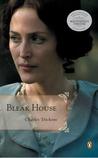
Bleak HouseBleak House by Charles Dickens
My rating: 4 of 5 stars

Bleak House is a full length novel by Charles Dickens. It is probably most famous for featuring the long running Jarndyce vs Jarndyce case but this is a secondary theme to the story of Esther Summerson. Esther has been brought up in mysterious circumstances and has been told about her mother
Your mother, Esther, is your disgrace and you were hers.

Esther is taken in by the wealthy John Jarndyce to be a companion to his young ward, Ada Clare. Esther, Mr Jarndyce and the young wards in Jarndyce are central to the story.

I'm not going to say more about this to avoid spoilers. 

Like much of Dickens, social issues are covered: the slow law courts, illegitimacy, the homeless poor and more.

This was my second reading of Bleak House; the first being three years ago. On this reading, I appreciated the intricacy of the plot and the amount of foreshadowing within the writing. It felt as through Dickens was trying to hint at what was coming next, yet, not enough that he gives the game away. This feature helped the book keep its appeal despite knowing what would happen next.

Bleak House falls down on the lack of character development in some of the major players. For example, John Jarndyce is an enigmatic character and a major part of the story, yet, as an older man, his past is not explored and his thoughts and emotions are only seen though the eyes of Esther. Esther, herself, is too perfect. Yes, she sometimes betrays herself but generally, she is flatter, as a person, than we would expect especially when compared with what we come to know of the depths of emotion in her mother. Does she repress all emotion even from the diary? The third person who seems only too superficial is Allan Woodcourt. His conversation is Esther, on walking back from Richard and Ada's, near the end of the book is constrained despite the fact that he might have grounds to have felt deceived by the third party.

Some other, more minor, characters seem better described, for example, Caddy Jellaby and Sir Leicester Dedlock. Both of these are also developed through the book.

This is not a children's book. I certainly read some Dickens as a child but hadn't read Bleak House until three years ago. I wouldn't have a problem with one of my teenagers reading the book but there would need to be some discussion around the social issues. 

Do read this book for the richness of the plot; the language and the way in which inanimate objects pick up the mood of the book but be prepared to be left with questions about some characters. 


View all my reviews

This is linked to Back to the Classics 2016.

If you enjoyed this post you may like to follow Delivering Grace by Google Friend Connect, G+,Facebook, Pinterest, Instagram or e-mail.

Monday, 22 February 2016

Runnymede and the Magna Carta

Strangely, Runnymede is somewhere that we had never been, until last week. Despite, not visiting last year, in the anniversary year, we decided the time had come especially as our younger two were keen to visit the place that they had been learning about in history. So we had a parent and younger children trip.

The day we visited was very wet and Runnymede is an outside venue. Wellies/walking boots and waterproof clothing were essential. It is not a suitable for disabled visitors nor for non-specialist pushchairs. The pictures all look damp because it was damp!

The oddest thing about Runnymede is that it is really an American monument. It seems as though England has really forgotten the Magna Carta.

The main memorial was erected by the American Bar Association.


One of the other major monuments, on the site, is to J.F. Kennedy. In fact, the ground on which this monument stands was actually donated to the US.

The ground up to the J.F. Kennedy monument abounded with wildlife and was a great nature walk.


The last, and newest, monument was commissioned by the National Trust and Surrey County Council to make the 800th anniversary of the Magna Carta, last year. England has managed one mark of remembrance! This is called the Jurors and depicts various scenes from around rights for various different groups.


This shows a boat full of refugees and commemorates responsibility to refugees and maritime search and rescue protocols.

Despite the mud, we stayed for just over a couple of hours. It was worth visiting although might well be better in summer when it might not be necessary to empty water out of wellies! 


If you enjoyed this post you may like to follow Delivering Grace by Google Friend Connect, G+,Facebook, Pinterest, Instagram or e-mail.


Thursday, 18 February 2016

Scotney Castle

This year, we have a family National Trust ticket and are using this to explore history and spend time outside. 

Scotney Castle is in Kent, just off the A21 south of Tunbridge Wells. In many ways it is rather strange. Until the nineteenth century, the Castle was a large home but the then owner decided to rebuild and to have the Castle partially demolished to make a folly. Imagine getting planning permission to do that now. The net result is really two places to visit on one rather beautiful site.


A chocolate box castle


Over half term, there has been a cat burglar quiz in the house. The last owner loved cats and so there are plenty of cat ornaments around the place. 


The last time we visited there was a cat in residence. Sadly, that cat has now died but a new rescue cat arrived at the weekend but was still too nervous to be seen.

The house was furnished as a country home. Some of the books were quite modern which isn't surprising as the last owner died in 2006.


Outside, there was another treasure hunt with stamps which cut shaped holes in paper. I'm sure there is a special name for these type of stamps. They weren't completely effective so we took pictures of some of the stamping points instead.

 I loved this little boat house.

The Castle is surrounded by a moat

and is not completely in ruins and has some functional rooms as well as a priest hole.

We didn't do justice to the grounds today. 


Recommended for its view of history interacts with earlier history; the realism of the house and child friendly grounds. 

If you enjoyed this post you may like to follow Delivering Grace by Google Friend Connect, G+,Facebook, Pinterest, Instagram or e-mail.